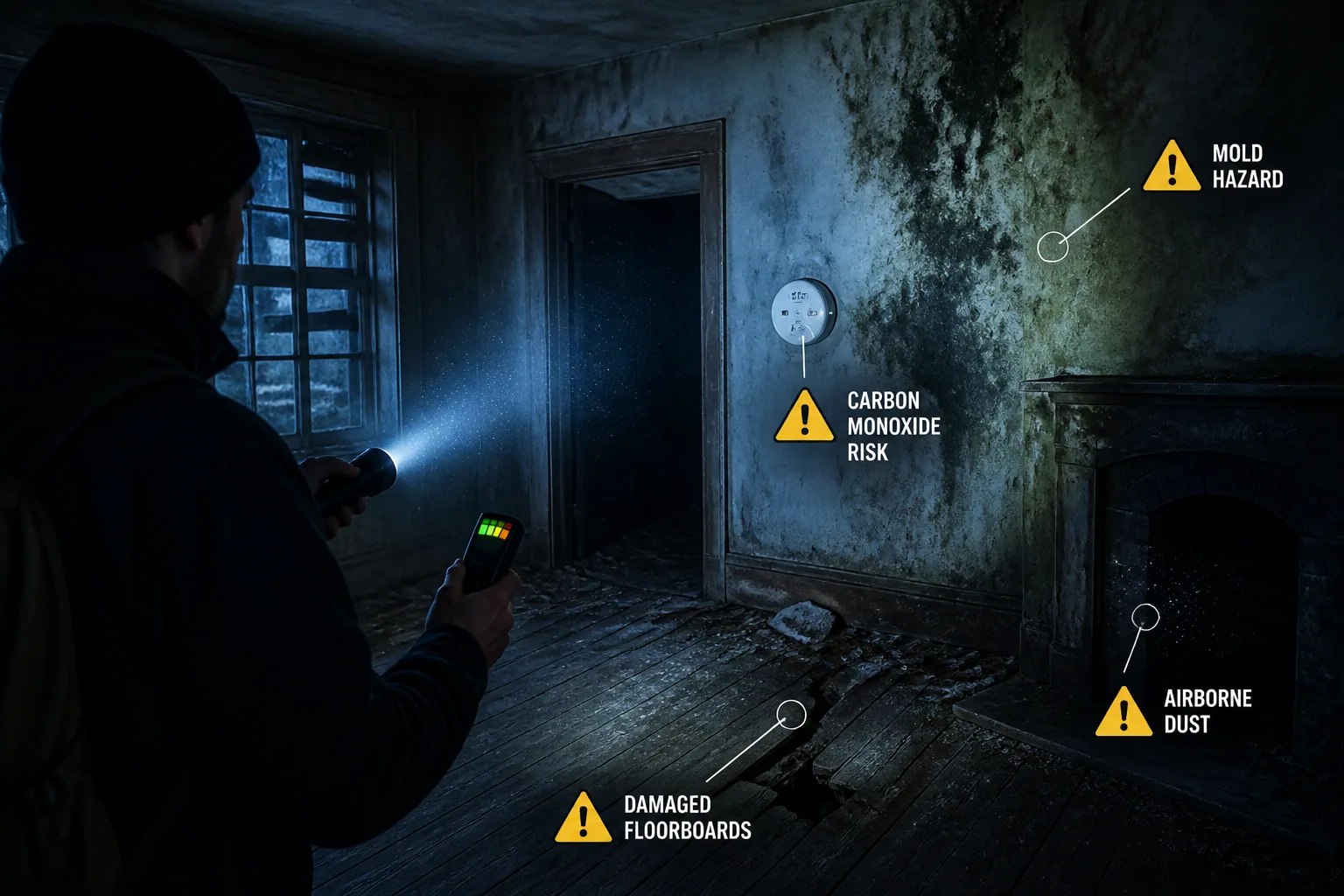
Beyond the Haunt: How Environmental Health Hazards Are Mistaken for Ghosts — What Every Investigator Should Know
Not every strange sound, cold spot, or uneasy feeling comes from the supernatural. In many cases, the real source is something far more ordinary and far more important to catch early: an environmental health hazard. Mold, carbon monoxide, radon, pests, plumbing issues, faulty wiring, infrasound, and electromagnetic interference can all produce experiences that feel eerie, alarming, or even paranormal. For ghost hunters, skeptics, and homeowners, learning to rule out these causes is not just good practice. It is a safety issue.
The best investigators do not start by asking, “What spirit is here?” They start by asking, “What in this environment could explain what people are reporting?” That shift in mindset improves credibility, sharpens evidence, and can prevent dangerous conditions from being overlooked. It also helps explain why some locations with a reputation for being haunted end up producing symptoms like headaches, fear, strange odors, footsteps, or a sense of being watched without any need for a paranormal explanation.
Why Some Hauntings Start With the Environment
Human perception is strongly influenced by context. If a room feels damp, smells musty, hums softly, or has fluctuating temperatures, the brain begins looking for patterns and meaning. In an old house or an abandoned building, that can quickly turn into a ghost story. Even before any dramatic event happens, the body may already be reacting to discomfort, stress, or subtle environmental changes.
Many so-called hauntings begin with a combination of physical cues and expectation. A creaking floorboard, a draft, a flicker of light, and a vague feeling of unease can build on each other until the mind fills in the blanks. That is why investigators should treat reports of paranormal activity as clues, not conclusions. The goal is not to dismiss anyone’s experience. The goal is to check whether the environment itself could be producing those experiences.
This approach is especially important because environmental hazards can create real symptoms. Some are mild and annoying. Others are dangerous. Either way, the effects can feel intense enough that people interpret them as fear, presence, or haunting.
How Mold, Carbon Monoxide, and Radon Affect the Mind and Body
Mold is one of the most common environmental issues mistaken for something paranormal. According to the CDC, indoor mold exposure often causes sneezing, nasal congestion, itchy or watery eyes, skin rashes, and airway irritation. Those symptoms can leave a person feeling drained, unsettled, and physically off, which often gets described as a place that feels “wrong” or “heavy”. Source: https://www.cdc.gov/niosh/mold/health-problems/index.html
Research also links mold exposure, including toxic molds capable of producing mycotoxins, to neurological symptoms such as headaches, memory problems, emotional changes, and even seizures. Healthline notes that these kinds of symptoms can overlap with experiences people may interpret as paranormal, especially when they happen in an old or visibly deteriorating building. Source: https://www.healthline.com/health/mold-and-neurological-symptoms
Carbon monoxide is even more dangerous because it is colorless and odorless. Mayo Clinic explains that CO poisoning can cause headache, dizziness, confusion, nausea, and flu-like symptoms, which are easy to misread as stress, illness, or something supernatural. At lower levels, long-term exposure may also contribute to fatigue, impaired memory, concentration problems, sleep disturbances, and emotional changes. Source: https://www.mayoclinic.org/diseases-conditions/carbon-monoxide/symptoms-causes/syc-20370642 and https://www.drugs.com/health-guide/carbon-monoxide-poisoning.html
Radon does not create ghostly sensations in the same direct way, but it matters because it is another hidden indoor hazard that can go unnoticed for years. The key lesson is simple: when a building has poor ventilation, damp areas, or aging infrastructure, the chance of multiple hazards rises. What begins as a story about a haunting may really be a story about a building that needs attention.
When EMF, Infrasound, and Faulty Wiring Create Paranormal-Like Effects
Some of the most convincing paranormal experiences are actually linked to subtle environmental energy and sound conditions. Fluctuating electromagnetic fields near wiring, appliances, or unusual structures have long been discussed in paranormal research. While the science is still debated, some literature suggests that certain EMF strengths may affect the temporal lobes of the brain, potentially producing hallucination-like effects or sensed presences. A study by De Sano and Persinger found that weak magnetic fields at 1 Hz or 4 Hz over the temporal lobes altered imagination and suggestibility. Source: https://pubmed.ncbi.nlm.nih.gov/3601616/
That does not mean every EMF reading is meaningful or that EMF alone explains every ghost story. It does mean investigators should be careful about drawing conclusions from spikes without context. Wiring faults, electrical surges, and nearby equipment can all create misleading readings. In a location where people already expect something spooky, a fluctuating meter can reinforce the feeling that a presence is nearby.
Infrasound is another factor that often gets overlooked. Sound below the range of conscious hearing, generally under 20 Hz, can still affect the body. Research summarized in a Polish and American study suggests infrasound exposure may elevate cortisol, increase negative mood states, create fear, and trigger a sense of presence even when nothing is visibly there. Source: https://pmc.ncbi.nlm.nih.gov/articles/PMC13158192/
That matters because many old buildings naturally produce low-frequency vibration. Boilers, fans, traffic, industrial equipment, and even pipes can generate sensations people describe as footsteps, rumbling, or a figure moving nearby. A recent analysis of allegedly haunted locations, including Mary King’s Close, found that many participants reported cold sensations, being watched, or unexplained sounds, but the patterns were tied to environmental irregularities rather than supernatural causes. Source: https://arstechnica.com/science/2026/04/that-spooky-sensation-likely-due-to-rumbling-pipes-not-spirits/
For investigators, the takeaway is practical. If a location feels strange, check for electrical issues, hidden vibrations, fans, HVAC systems, and other low-frequency sources before assuming an apparition is responsible.
Pests, Plumbing, and Structural Decay: The Hidden Sources of Strange Noises
Not all ghostly activity is visual or emotional. Sometimes it is just noise. Scratching in walls, tapping in ceilings, slow groans, drips, and thuds can come from pests, plumbing, or the natural settling of a building. Rodents, insects, birds, and raccoons can all produce sounds that seem intentional when heard in the dark. Old pipes can knock, expand, and contract. Loose boards can pop. Air moving through damaged vents can whistle or moan.
Structural decay also creates the classic conditions people associate with haunting. Poor insulation produces cold spots. Moisture creates damp areas. Cracks and gaps allow drafts, pests, and odors to move through the building. Charles C. Roberts Jr. has noted that cold spots and poor insulation are commonly observed in homes reported to be haunted, and those same conditions can promote mold growth. Source: https://www.croberts.com/mold2.htm
When someone hears footsteps in an empty hallway, a fair investigation should begin by asking about floor construction, nearby plumbing, attic access, wildlife, and air movement. The more ordinary the cause, the more valuable it is to identify it early. A good investigation is not weakened by finding a squirrel in the attic or a loose pipe in the wall. It is strengthened, because the remaining unexplained evidence becomes much more credible.
Case Studies Where a ‘Haunting’ Had a Natural Cause
Many famous haunting stories become less mysterious when the environment is examined carefully. A family may report headaches, mood changes, and strange sensations in the same house. Later, a carbon monoxide leak is found. Another building may be described as cold, oppressive, and full of whispering sounds, only for investigators to discover poor insulation, mold, and airflow patterns causing the exact same impressions.
These cases are not rare because old buildings are often complicated. They may contain aging appliances, hidden water damage, faulty wiring, and ventilation problems all at once. One issue can mask another. A damp basement may invite mold and pests. A weak exhaust system may trap carbon monoxide. A buzzing transformer or electrical panel may create EMF fluctuations. When several factors overlap, a location can feel genuinely unsettling without any paranormal cause at all.
That is why the strongest investigations treat every sensation as data. If multiple people report the same thing, document the timing, location, weather, temperature, humidity, electrical conditions, and building history. Then compare those notes against environmental findings. In many cases, the pattern becomes clear once the physical conditions are mapped out.
Red Flags That Suggest an Environmental Hazard Instead of a Ghost
There are some warning signs that should immediately push an investigator toward a safety check. Headaches, dizziness, nausea, confusion, or flu-like symptoms in multiple people can point to carbon monoxide or poor ventilation. Sneezing, itchy eyes, congestion, and rashes often suggest mold or another indoor irritant. Strong musty smells, visible water damage, or recurring dampness should raise concern right away.
Other red flags include sudden temperature differences tied to a specific part of the building, especially if those spots are near leaks, insulation gaps, or exterior walls. Repeated sounds that match airflow, plumbing activity, or appliance cycles are also worth investigating. If people only feel “watched” in one room near electrical equipment, a breaker panel, or heavy wiring, EMF and environmental stressors should be considered before any paranormal explanation.
The key question is whether the experience follows the building or follows the person. If symptoms happen mainly in one location and improve when people leave, that is often a sign of an environmental cause. A haunting story may be memorable, but a hazard pattern is actionable.
How to Test a Location Safely Before a Paranormal Investigation
Before any ghost hunt, safety should come first. Start with a basic walkthrough in daylight if possible. Look for visible water damage, mildew, unusual odors, damaged wiring, pest activity, blocked vents, and evidence of structural wear. Check whether the building has functional carbon monoxide detectors and whether anyone has documented radon testing.
Next, measure the environment in a way that can be compared over time. Record temperature, humidity, and if possible, CO levels, EMF readings, and airflow changes. Pay attention to where readings change and whether those changes line up with appliances, wiring, metal objects, or structural features. A single reading means very little without context.
If anything suggests an active health hazard, stop and escalate appropriately. A paranormal investigation should never continue in a space that may contain carbon monoxide, severe mold, exposed wiring, or serious structural damage. If you need a tool that helps you organize sessions and keep your investigation logs in one place, a product like Ghost Detector: Ectify can be useful for recording your sessions and tracking patterns over time: https://findthe.app/ectify-fc72z0
The important part is not the app itself. It is the habit of documenting carefully so you can compare what you felt with what the environment was actually doing.
Best Practices for Documenting Environmental Conditions Alongside Evidence
Good documentation is what separates a dramatic story from a useful investigation. Along with audio, photos, and witness statements, include environmental notes. Record the date, time, weather, room conditions, occupancy, lighting, and any active equipment. Note whether windows were open, HVAC was running, or electrical devices were turned on. If you detect an odor, describe it rather than guessing at its source.
When possible, log the same location multiple times. Environmental conditions change across the day, and a phenomenon that appears mysterious at midnight may become obvious once the sun is up and the heater turns on. Consistency matters more than intensity. A smaller but repeated pattern often reveals more than a single dramatic event.
It also helps to separate subjective and objective observations. “The room felt hostile” is a subjective note. “Temperature dropped 8 degrees near the south wall, where moisture was visible” is an objective note. Both are useful, but they are not the same. The clearer your records, the easier it becomes to rule things out honestly.
Why Ruling Out Hazards Makes You a Better Investigator
Some investigators worry that focusing on hazards will ruin the mystery. In reality, it does the opposite. The more thoroughly you rule out environmental explanations, the more meaningful any remaining evidence becomes. If a location still produces unusual events after mold, CO, wiring, airflow, pests, and vibration have been checked, your findings are far stronger than if you skipped those steps entirely.
This is also how you build trust. Property owners, clients, and audiences are far more likely to respect an investigator who shows restraint, testing, and caution. Saying “We found a likely cause” is not a failure. It is a professional conclusion. In many cases, it may also prevent illness, repair costs, or escalation of structural damage.
Science-based investigation does not eliminate wonder. It simply makes sure wonder is not built on a dangerous mistake. That is what separates careful research from guesswork.
A Practical Checklist to Use on Every Future Investigation
Before treating a location as haunted, run through a simple checklist. First, ask whether anyone has headaches, dizziness, nausea, memory issues, or flu-like symptoms. If yes, consider CO and ventilation immediately. Second, check for mold, dampness, musty odors, rashes, and visible water damage. Third, inspect for pests, scratches, droppings, nesting, and noises from hidden spaces. Fourth, look for faulty wiring, flickering lights, buzzing panels, and unusual EMF patterns. Fifth, note drafts, insulation problems, pipes, and structural settling that could explain sounds or cold spots.
Then document everything. Take measurements. Photograph conditions. Record witness reports separately. Compare claims against the physical environment. If a pattern points to a hazard, treat it as one until proven otherwise. If nothing explains the event, you at least know you investigated responsibly.
That is the real lesson behind “Beyond the Haunt.” The safest and most credible paranormal investigations are the ones that begin by looking for ordinary causes first. In many cases, the ghost story is not the mystery. The building is.
