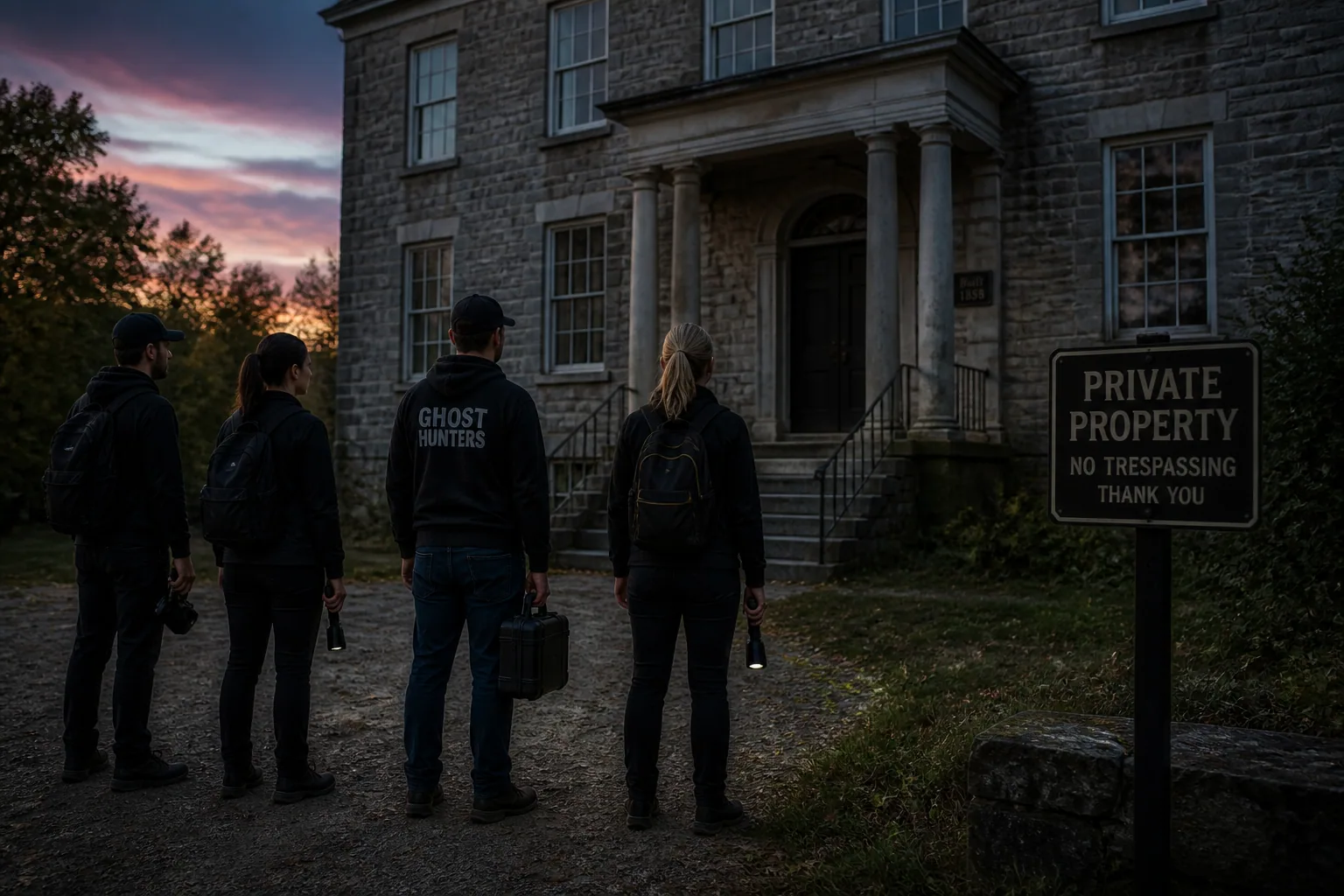
Ghost Hunt Etiquette: Community Guidelines, Legal Basics, and Respectful Investigation
Ghost hunting can be exciting, but it is not just about what happens during an investigation. The way you enter a location, speak to owners, handle evidence, and leave a site matters just as much as the tools you carry. Good etiquette protects people, preserves history, and helps the paranormal community stay credible. If you want to be taken seriously, you need more than enthusiasm. You need permission, patience, professionalism, and a clear respect for the law.
That is especially important for beginners and casual investigators, because the most common mistakes are not technical. They are social, legal, and ethical. Entering a property without permission, treating witnesses carelessly, damaging fragile spaces, or exaggerating evidence can do real harm. A responsible investigator understands that every location has owners, boundaries, memories, and rules that deserve attention.
Why Ghost Hunt Etiquette Matters
Etiquette is not just about being polite. In ghost hunting, etiquette is part of risk management and community trust. A respectful investigator is less likely to get shut out of locations, less likely to create legal problems, and more likely to build long term relationships with people who may share stories, access, or evidence opportunities later.
It also protects the paranormal field itself. When investigators act recklessly, sensationalize every sound, or disrespect a place, they reinforce the stereotype that ghost hunting is careless or fake. On the other hand, when teams act professionally, document carefully, and respect boundaries, they help set a standard that others can follow. That reputation matters when you are asking to investigate a private home, a historic building, or a site with cultural significance.
Permission First: Property Rights, Access, and Trespassing
The first rule of ghost hunt etiquette is simple: never assume access. In many U.S. states, criminal trespass means entering or remaining on someone else’s property without authorization, and penalties can range from fines to misdemeanor or felony charges depending on the circumstances. According to Nolo, that can become more serious in residences, repeated offenses, or places clearly marked with no trespassing notices: https://www.nolo.com/legal-encyclopedia/criminal-trespassing-law.html
Private property boundaries are not always obvious. Even the area around a home can be protected. LegalClarity notes that curtilage, meaning the area immediately surrounding a residence, may receive the same kind of protection as the home itself: https://legalclarity.org/private-investigators-legal-boundaries-and-authority-explained/ For ghost hunters, that means porches, yards, outbuildings, driveways, and similar spaces are not automatically fair game just because they are outside the front door.
You also cannot rely on the absence of a sign. In 22 U.S. states, property owners can use purple paint markings as legally recognized notice of private property, according to LegalClarity: https://legalclarity.org/is-it-trespassing-on-private-property-without-a-sign/ If you see those markers, treat them as a clear warning that the land is restricted.
The safest standard is written permission. Reputable paranormal groups often ask for a clear agreement that explains what spaces can be accessed, when the investigation will happen, how long it will last, and what rules apply. Smart Investigations and the Ozarks Paranormal Society both emphasize written or clearly documented permission as a basic protection for everyone involved: https://www.smart-investigations.org/about-the-paranormal and https://www.theozarksparanormalsociety.com/index.php/paranormal-faq-s/ghost-hunting-101.html Verbal permission may seem easier in the moment, but if there is ever a dispute, written permission is much stronger.
Know the Law: Permits, Liability, and Local Rules
Permission to enter a site is only the beginning. Depending on the location, you may also need permits, insurance coverage, or explicit approval from local authorities. This is particularly important for public buildings, historic properties, religious sites, or places that host visitors during normal hours. A location can be open to the public and still restricted for after hours access or paranormal activity.
Liability is another issue many beginners overlook. LegalMatch explains that property owners may pursue civil claims for trespassing even when no damage occurs, and that can still create legal consequences: https://www.legalmatch.com/law-library/article/trespassing-lawyers.html If someone is injured during your investigation, liability becomes even more serious. That is why it is smart to ask about hazards, emergency procedures, and any site specific restrictions before a session begins.
Some sites also have special legal protections. Connect Paranormal notes that historic, religious, and sacred places can involve added legal and ethical concerns, especially if investigators damage property, disturb remains, or violate privacy expectations: https://connectparanormal.net/2026/03/19/ghost-hunting-know-the-law-before-you-explore/ If a location has cultural, spiritual, or memorial importance, treat it with the highest level of care and do extra research before asking for access.
The practical takeaway is simple: know the local rules before you arrive. Check city ordinances, state trespass laws, filming rules, and any requirements from the owner or managing organization. A little preparation can prevent a very expensive mistake.
Respect the Dead, the Living, and the History of a Place
A haunted location is never just a backdrop for an investigation. It may be a former home, a place of worship, a workplace, a battlefield, a grave-adjacent site, or a building tied to real personal loss. That means ghost hunters should think about the people connected to the site, not just the paranormal potential.
Respect begins with language. Avoid joking about tragedy, death, or the personal history of the site in front of owners, staff, or witnesses. Even if your team uses humor privately, keep your public behavior measured. A location that feels spooky to you may still carry deep emotional meaning for someone else.
It also means not touching, moving, or staging objects for dramatic effect. If an item appears out of place, document it as you found it. Monstrous.com specifically advises investigators to leave a site as they found it and avoid altering the scene: https://www.monstrous.com/ghost-hunting-rules/ That principle is both ethical and practical, because once the scene changes, your evidence becomes weaker and your credibility drops.
Respect for the dead also means not treating graves, memorials, or sacred objects as props. If a place has funerary or spiritual significance, be careful with your tone, your filming, and your movement through the site. The best investigators do not try to dominate a location. They observe it quietly and let it speak for itself.
How to Behave with Owners, Staff, and Witnesses
Your relationship with owners and witnesses can make or break an investigation. Be on time, introduce yourself clearly, explain your plan, and listen more than you talk. Owners are not just gatekeepers. They are the people who know the building, its risks, its schedule, and its history.
Professional behavior matters from the first message to the final follow up. Ask what areas are off limits, where you may park, whether you can use lights or audio recorders, and who should be notified if something unusual happens. If staff members are present, do not interrupt their work or treat them as if they are part of your show. If a witness shares an experience, take it seriously even if you have not verified it yet.
It is also wise to avoid leading questions. Instead of asking, “Did you see the ghost in the hallway?” ask open questions like, “What have you noticed here that felt unusual?” That helps prevent accidental suggestion and produces cleaner testimony. Good etiquette is not only polite, it improves your evidence quality.
If someone asks you not to do something, stop. That includes filming in certain rooms, entering private areas, or discussing their story publicly. Trust is fragile, and once it is broken, it is hard to earn back.
Leave No Trace: Protecting Haunted and Historic Locations
A leave-no-trace mindset is one of the best habits a ghost hunter can develop. The goal is to leave every site exactly as you found it, or cleaner. That means no litter, no damage, no stickers, no chalk marks, no damaged locks, and no souvenirs.
This applies to both obvious and subtle changes. Do not open sealed doors without approval. Do not shift furniture to create a better camera angle. Do not remove an object because it looks interesting. Even small changes can harm a historic site or alter the conditions that make a location worth studying.
It is also smart to scout locations in daylight when possible. Monstrous.com recommends checking for broken glass, holes, unstable flooring, and other hazards before a session begins: https://www.monstrous.com/ghost-hunting-rules/ That is not just a safety tip. It also helps you avoid accidentally damaging the site or injuring yourself in an area that should have been avoided.
If you are investigating a fragile building, cemetery, or older property, consider wearing non-marking shoes, keeping gear compact, and reducing the number of people on site. The less impact you leave behind, the more welcome paranormal investigators will be in the future.
Team Conduct, Safety, and Group Communication
No serious investigation should depend on improvisation alone. Strong team conduct starts with a plan. Know who is responsible for lights, audio, camera checks, site communication, and emergency contact. A simple structure reduces confusion and makes it easier to respond if something unexpected happens.
Many groups follow a basic rule: never investigate alone. That is good practice for both safety and accountability. Monstrous.com also recommends having proper lighting, extra equipment, and letting someone outside the team know where you are: https://www.monstrous.com/ghost-hunting-rules/ If something goes wrong, a backup contact can make a real difference.
Team conduct also includes what not to do. Do not use alcohol or psychoactive substances during an investigation. Do not argue loudly in a location. Do not pressure teammates into uncomfortable situations. And do not let competition for the best reaction or the most dramatic clip override basic common sense.
If you are working with a group, establish communication rules before entering the site. Decide how to signal a hazard, how to pause a session, and how to confirm when someone has left an area. Good communication keeps the investigation calm, organized, and professional.
Ethical Evidence Collection and Honest Reporting
Evidence only matters if it is collected and presented honestly. Ethical reporting starts with the assumption that natural explanations come first. A draft, a pipe, a loose floorboard, a reflection, or a radio signal can explain more than many beginners realize. Rule out ordinary causes before calling something paranormal.
Objective recording is essential. Note the time, location, environmental conditions, who was present, and what equipment was running. If a sound or light anomaly appears, record the full context instead of trimming away inconvenient details. Short clips may be useful for sharing, but longer raw documentation is more credible.
Monstrous.com and Connect Paranormal both stress honest reporting, objective documentation, and avoiding sensational claims: https://www.monstrous.com/ghost-hunting-rules/ and https://connectparanormal.net/2026/03/19/ghost-hunting-know-the-law-before-you-explore/ That means you should not label something paranormal just because it is interesting. It also means you should admit uncertainty when the evidence is unclear.
Respect the people connected to the site when you report your findings. Owners, witnesses, and historians are not background characters. If their privacy matters, keep their names out of public posts unless they have given permission. Ethical reporting builds trust because it shows that your goal is understanding, not attention.
Photography, Recording, and Privacy Best Practices
Photography and audio can be powerful tools, but they also carry privacy responsibilities. Do not record people without consent in places where they have a reasonable expectation of privacy. That includes private homes, staff-only areas, and situations where someone clearly does not want to be filmed.
Before you start recording, ask what is allowed. Some owners may approve audio but not video. Others may allow group photos but not public posting. If you are filming for social media, be even more careful, because a casual clip can spread far beyond the intended audience.
Keep your framing respectful. Do not spotlight personal belongings, family photos, or sensitive documents unless the owner explicitly wants them included. If you capture a witness statement or a room that reveals private information, handle that material carefully and remove it from public edits if needed.
Good privacy habits also improve trust. When people know you will not misuse their image or their story, they are more likely to cooperate with future investigations. That makes your access stronger and your reports better.
Common Beginner Mistakes That Damage Credibility
One of the fastest ways to lose credibility is to treat every bump, noise, or electronic glitch as proof of haunting. Another is to post dramatic claims before reviewing the evidence carefully. If you want people to take your work seriously, slow down and verify first.
Other common mistakes include arriving without permission, overstaying the agreed time, moving objects for effect, recording without consent, and ignoring site rules. Beginners also sometimes forget basic safety, such as checking batteries, bringing proper lighting, or telling someone where they are going. Monstrous.com’s practical guidance on equipment readiness and site conduct is worth keeping in mind: https://www.monstrous.com/ghost-hunting-rules/
A subtler mistake is disrespecting witnesses by trying to sound more certain than you are. If a person shares an experience, do not mock it, and do not immediately reinterpret it for entertainment. People remember how they were treated, and that memory affects whether they will work with you again.
The biggest credibility problem, though, is dishonesty. If you fake evidence, exaggerate a story, or hide context that weakens your claim, you may gain short term attention but lose long term trust. Paranormal work is already skeptical enough. The community does not need more theatrics.
Building Trust Within the Ghost Hunting Community
Trust is built through consistency. If you are polite, careful, and honest every time, people notice. That includes other investigators, owners, historians, and even skeptics. Over time, your reputation becomes part of your access and your ability to collaborate.
One of the simplest ways to build trust is to share your process, not just your conclusions. Explain how you got permission, what methods you used, what natural causes you ruled out, and what remains uncertain. That makes your work easier to evaluate and harder to dismiss.
It also helps to be generous with credit. If a property owner, local guide, or witness contributed useful information, acknowledge that contribution when appropriate. Respect and transparency go a long way in a field where rumors spread quickly.
If you want a structured way to keep sessions organized and easier to review later, a tool like Ghost Detector: Ectify can help you document your work and keep session history in one place: https://findthe.app/ectify-fc72z0. Used responsibly, a recording and logging app can support better note taking and more careful review, which is exactly what credibility depends on.
A Simple Code of Conduct for Every Investigation
A good code of conduct does not need to be complicated. It just needs to be consistent. Here is a simple standard you can use for almost any investigation: get permission first, confirm the legal boundaries, protect privacy, leave the location unchanged, and report findings honestly.
You should also add a few personal rules: arrive prepared, never investigate alone unless it is explicitly safe and allowed, respect the people tied to the location, and stop immediately if you are asked to leave or if conditions become unsafe. Those habits reduce legal risk and improve the quality of your work.
If you keep only one mindset from this guide, let it be this: a respectful investigator protects the site as much as they seek answers from it. Ghost hunting should never leave a bad footprint, a broken relationship, or a questionable story behind. Do the work carefully, and you will earn more access, better evidence, and a stronger place in the community.
