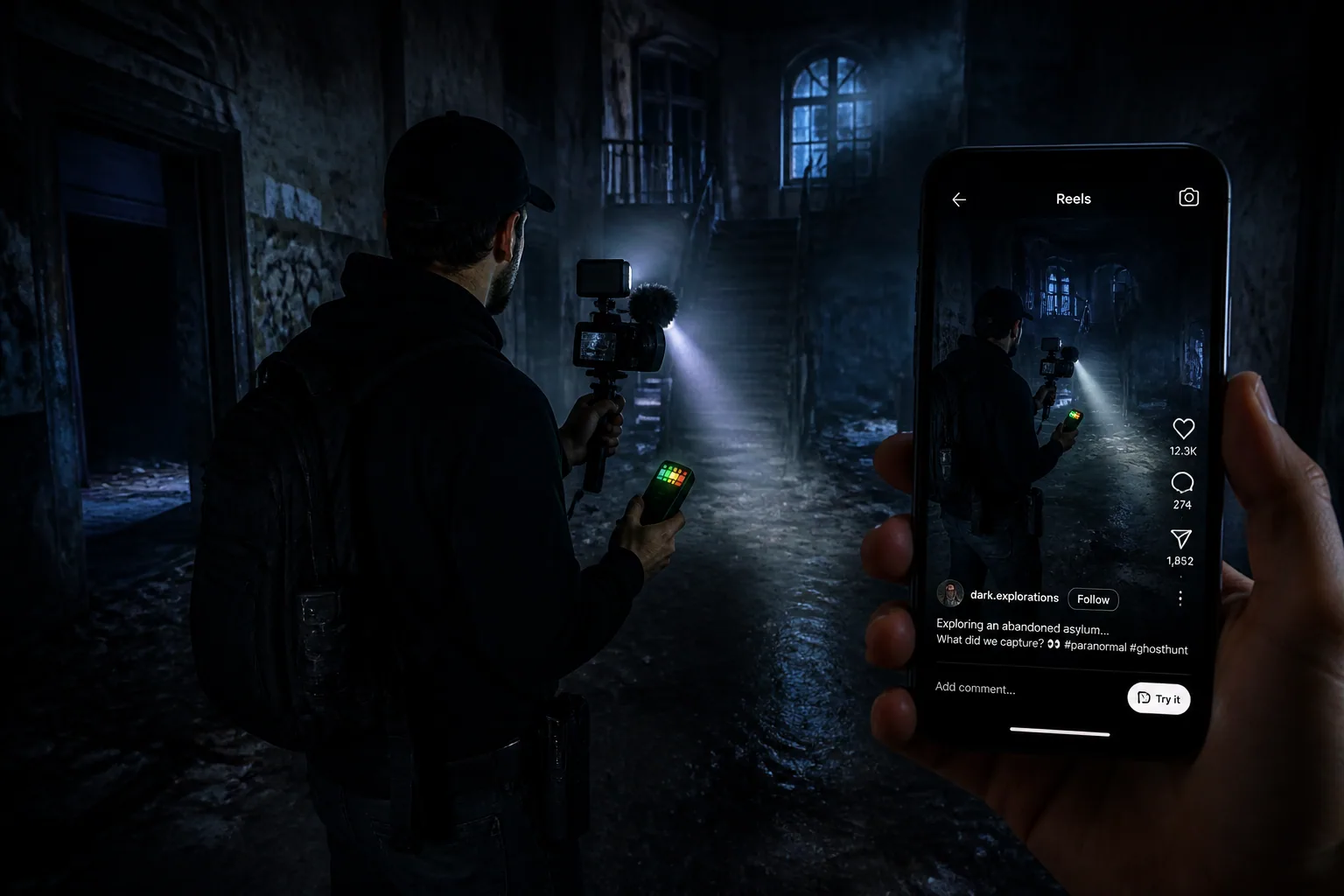
Harnessing the Power: How to Use Your Ghost Sessions to Grow a Social Media Following
Ghost hunting and social media fit together surprisingly well. Paranormal content naturally creates curiosity, tension, and a built-in question: what happened next? That question is exactly what keeps people watching, commenting, and sharing. When you approach each investigation like a content opportunity, not just a night out exploring, you can turn one session into a steady stream of clips, stories, posts, and long-form recaps that help you grow an engaged following without losing credibility.
The key is not to fake drama or force conclusions. It is to document the process in a way that feels cinematic, clear, and honest. That means planning your investigation with narrative in mind, capturing the most replayable evidence moments, editing for clarity, and shaping the material for the format you are publishing on. If you do it well, your audience gets the thrill of the unknown and the trust that comes from transparent presentation.
Why Ghost Hunting Content Performs So Well on Social Media
Paranormal content is a natural fit for social media because it combines suspense, story, and reaction. People do not need to be hardcore believers to enjoy it. They just need to feel like they are being let into a mysterious moment before everyone else. That makes ghost sessions especially strong for short-form content, where the goal is to get attention fast and hold it long enough for the viewer to care about the payoff.
Research supports this format advantage. Short-form videos generate roughly 2.5 times more engagement than long-form video content, which is one reason ghost clips can spread quickly when they are packaged well. On Instagram, Reels get 36% more reach than carousels, although carousels earn about 12% more engagement per reach than Reels. In practice, that means a spooky 10 to 20 second clip can bring new people in, while a carousel or follow-up post can help them stay and engage more deeply.
Paranormal investigation content also benefits from story structure. Research on paranormal YouTube channels shows that many successful series follow a dramatic arc similar to Freytag’s model: setup, inciting incident, escalation, climax, and resolution or lingering mystery. That structure works because viewers want an arc, not just random clips. If your audience can feel the progression of the night, they are more likely to watch until the end and come back for the next session.
Plan the Investigation Like a Creator, Not Just an Explorer
A strong ghost session begins before you even leave for the location. If your goal is growth, you should plan the night around both investigation and storytelling. That does not mean scripting the outcome. It means deciding what you want to capture, which locations offer the best visuals, what equipment will be on camera, and where the strongest beats of the story might happen.
Think of the session in phases. Where is the setup? What makes the place interesting? What is the first sign that something unusual may be happening? What moment might become the climax of the video? Having those milestones in mind helps you move through the location with intention instead of hoping something usable happens by accident. It also makes it easier to edit later because you already know the shape of the story.
A creator mindset also means choosing angles that support the final edit. If you know you want vertical clips for TikTok and Reels, make sure some of your footage is shot with that framing in mind. If you want a longer YouTube recap, capture a few wide shots, quiet moments of atmosphere, and enough reaction audio to stitch the story together. The best sessions are the ones where the evidence is useful twice: once as proof of the moment and again as content people want to share.
Build a Narrative Before You Hit Record
Before recording starts, decide what story you are telling. Every investigation has the ingredients for a narrative, even if the evidence turns out to be inconclusive. There is the location history, the anticipation, the first strange noise, the team’s reaction, and the aftermath. If you think in narrative terms from the start, your footage will feel more intentional and easier for viewers to follow.
A useful approach is to treat the session like a mini documentary. Start with the premise: why this place is supposed to be haunted. Then establish the mood. After that, move into the first test or experiment, such as an EVP session, an EMF sweep, or a silent watch in a particularly active room. As the night goes on, let the story escalate naturally. Even if nothing dramatic happens, the audience can still follow your process and invest in the tension.
This is where the most shareable paranormal content often comes from. Viewers do not always need a full haunting. They need a clearly defined moment of uncertainty. A sound nobody can explain, a sudden sensor spike, a reaction that feels genuine, or a silence that lands at the right time can all become the centerpiece of a short clip. Your job is to structure the session so those moments are easy to spot and easy to understand later.
What Moments Make the Best Shareable Evidence
Not every moment in a ghost session is equally useful for social media. Some moments are important for the investigation but not very watchable. Others may look exciting in person but fail on camera because they are too subtle or too confusing. The most shareable evidence moments are usually the ones with a clear trigger, a visible reaction, and a simple question attached to them.
Look for three types of moments. First, the moment of change: a sudden EMF spike, a temperature shift, a distant noise, or a spirit box response that seems unusually specific. Second, the human reaction: the instant when someone turns, pauses, whispers, or says, “Did you hear that?” Third, the verification beat: a replay, a follow-up explanation, or a second angle that helps the audience understand what they are seeing or hearing.
A good shareable clip gives the viewer something to solve. It is not just a spooky reaction. It is a small mystery with enough context to be interesting and enough ambiguity to invite debate. That is why the most replayed paranormal posts often end with a question in the caption or a prompt to rewatch the clip with headphones on.
How to Capture Audio and Video That Viewers Can Actually Follow
The best evidence in the world is useless if people cannot hear it, see it, or understand what happened. That is why clarity matters so much in paranormal content. Your audience should be able to tell where they are, who is speaking, what device is being used, and what changed in the moment the clip becomes interesting.
For video, keep the subject framed clearly and avoid over-shaky footage unless the instability itself is part of the story. Use your camera to show both the person reacting and the area being investigated when possible. For audio, reduce background noise where you can, but do not overprocess it so heavily that it sounds artificial. The goal is to preserve the atmosphere while making the content understandable enough for a viewer on a phone speaker or earbuds.
It also helps to narrate the process in real time. A short line like “We just got a sudden spike here, and nobody is touching the device” gives the viewer context instantly. In a fast-paced social feed, context is not optional. It is what keeps people from scrolling past a clip that could have become your most engaging post.
Tools that record session history and save timestamps can make this much easier. For example, Ghost Detector: Ectify lets you record and share every session, track EMF changes, and review past investigations in one place. If you are trying to build a library of usable clips, having a single source for timestamps and audio can save a lot of time in post-production. You can see it here: https://findthe.app/ectify-fc72z0
Editing for Clarity Without Misleading Your Audience
Editing is where many paranormal creators either strengthen their credibility or damage it. Good editing makes the story easier to follow. Bad editing makes people feel manipulated. The difference is transparency. You can tighten pacing, remove dead air, crop for vertical formats, and add captions without changing the meaning of what happened.
When you edit, keep the original sequence intact unless you clearly label any rearrangement. If you cut between different parts of the night, make sure the viewer understands that the footage is being condensed. If you enhance audio, be careful not to exaggerate sounds into evidence they were never meant to be. Your credibility is more valuable than a single viral spike.
A useful rule is to preserve the core of the moment and only polish the presentation. Trim silence, add text labels for devices and locations, and use zooms or slow motion only when they help the audience notice something real. If the clip is meant to be a reaction post, keep the reaction front and center. If it is meant to be an evidence breakdown, let the viewer hear and see enough to judge for themselves.
Turn One Session Into Reels, Shorts, TikToks, and Posts
One investigation can become a whole content ecosystem if you break it into format-specific pieces. Short-form platforms reward fast hooks and quick payoffs, while longer posts allow for context and explanation. The trick is to assign each format a job instead of reposting the same edit everywhere.
Use short clips for the strongest single moments. For Reels and Shorts, think in terms of one question, one reaction, or one piece of evidence. Since short-form videos generate about 2.5 times more engagement than long-form content, these bite-sized posts are ideal for discovery. On Instagram, Reels also tend to get more reach than carousels, though carousels can outperform Reels in engagement per reached person. That makes a good carousel a strong follow-up if you want to explain the session in a little more depth.
Different platforms favor slightly different pacing. TikTok often rewards immediacy and personality. Reels often reward visually clear, polished clips. YouTube Shorts are great for quick teaser moments that push people toward a longer episode. A longer captioned post can then summarize the session, answer questions, and keep the conversation going after the first wave of attention fades.
How to Use Suspense, Reveals, and Context to Keep People Watching
Suspense works in paranormal content because it mirrors the audience’s own curiosity. The best clips do not reveal everything immediately. They open with a promise, build tension, and then pay off before the viewer loses interest. Research on viral short-form hooks suggests that high-performing clips often use a hard cut within about 1.7 seconds, a promise in under 8 words, visual proof in the first 3 seconds, and a clear payoff before the 30-second mark.
That means your opening matters more than almost anything else. Start with the anomaly, not the setup. A clip that begins with “Watch this EMF spike” is more likely to hold attention than ten seconds of walking through a hallway before anything happens. You can always add context afterward through captions, overlays, or a voiceover.
Retention matters too. Reels under 15 seconds typically need a view-through rate above 65% to be considered good, while 15 to 30 second clips tend to perform well above 50% retention. These are useful benchmarks because they remind you that suspense has to be efficient. If the clip takes too long to get to the point, the audience is gone before the payoff lands.
Good suspense is not deception. It is pacing. Let people lean in, but always deliver a meaningful reveal or a clear reason to keep watching until the end.
Captions, Keywords, and Hashtags That Help Paranormal Content Get Found
Your video may grab attention, but your caption helps discovery and encourages deeper engagement. Use it to provide the location context, describe the device or method used, and give viewers a simple instruction on how to watch the clip. A line like “Turn volume up and listen near the end” can dramatically improve completion and replay behavior.
Captions should also include keywords that match how people search for paranormal content. Think in terms like ghost hunting, EVP, haunted location, EMF spike, spirit box, paranormal investigation, and true footage if it is appropriate and accurate. The goal is not to stuff keywords everywhere, but to help platforms and viewers understand what the content is about.
Hashtags work best when they are specific. A few well-chosen tags often beat a messy block of generic ones. Combine broad discovery terms with niche community tags related to haunting, investigation, or local lore. Then keep the caption readable. People are much more likely to engage when the post sounds like a real person wrote it, not a template.
Repurposing Raw Clips Into Teasers, Breakdowns, and Follow-Ups
Raw session material is valuable because it can be turned into multiple types of content over time. One clip can become a teaser before the full upload, a breakdown after the main post, and a follow-up when viewers ask for more detail. This layered approach helps you stay visible without needing to stage new content constantly.
For example, a 12-second teaser might show only the spike and your reaction. A later breakdown can zoom in on the device readings and explain what happened. After that, you can post a follow-up carousel or comment reply addressing the most common questions. This gives your audience a reason to keep coming back and turns one night of filming into a conversation instead of a one-off post.
This is also where session history becomes useful. If you keep timestamps and notes from each investigation, you can revisit the same moment from different angles later. That helps you create content that feels organized and intentional, especially when you are building a series rather than posting randomly.
Ethics Matter: Disclaimers, Permissions, and Transparency
If you want long-term trust, ethics cannot be an afterthought. Paranormal content has a unique responsibility because it can blur the line between entertainment and evidence. Some communities explicitly ask creators to label staged or entertainment-based content clearly so viewers are not misled about what is being presented as real evidence. That principle is worth adopting even if your audience is casual.
Be honest about what you know and what you do not know. If a sound could have a natural explanation, say so. If a clip is edited for pacing, note that it is a condensed version of the session. If a location owner or group gave you permission to film, make that clear when relevant. Transparency does not ruin the mystery. It makes people more willing to trust you when something genuinely strange happens.
A simple disclaimer can go a long way. You are not lowering the drama by adding context. You are protecting your reputation and helping viewers understand the difference between a compelling story and a scientific claim. That distinction matters if you want people to follow your work for years, not just for one viral post.
How to Spark Comments, Shares, and Loyal Followers After Every Session
The end of the post is just as important as the beginning. Once people have watched a clip, give them a reason to respond. Ask whether they heard the same thing, whether they think the moment was explainable, or whether they want the full breakdown. Questions that invite interpretation are especially effective in paranormal content because audiences enjoy debating what counts as evidence.
You can also build loyalty by turning each session into a serial format. Post the teaser first, then the main evidence, then the explanation, then the follow-up reactions. When followers know there is a next step, they are more likely to return. That consistency is often what turns a casual viewer into someone who actively waits for your next investigation.
In the end, growth comes from the balance of three things: strong storytelling, clear evidence presentation, and ethical honesty. If you can deliver suspense without exaggeration, clarity without boredom, and consistency without losing your personality, your ghost sessions can become much more than investigations. They can become the foundation of a memorable social media presence.
