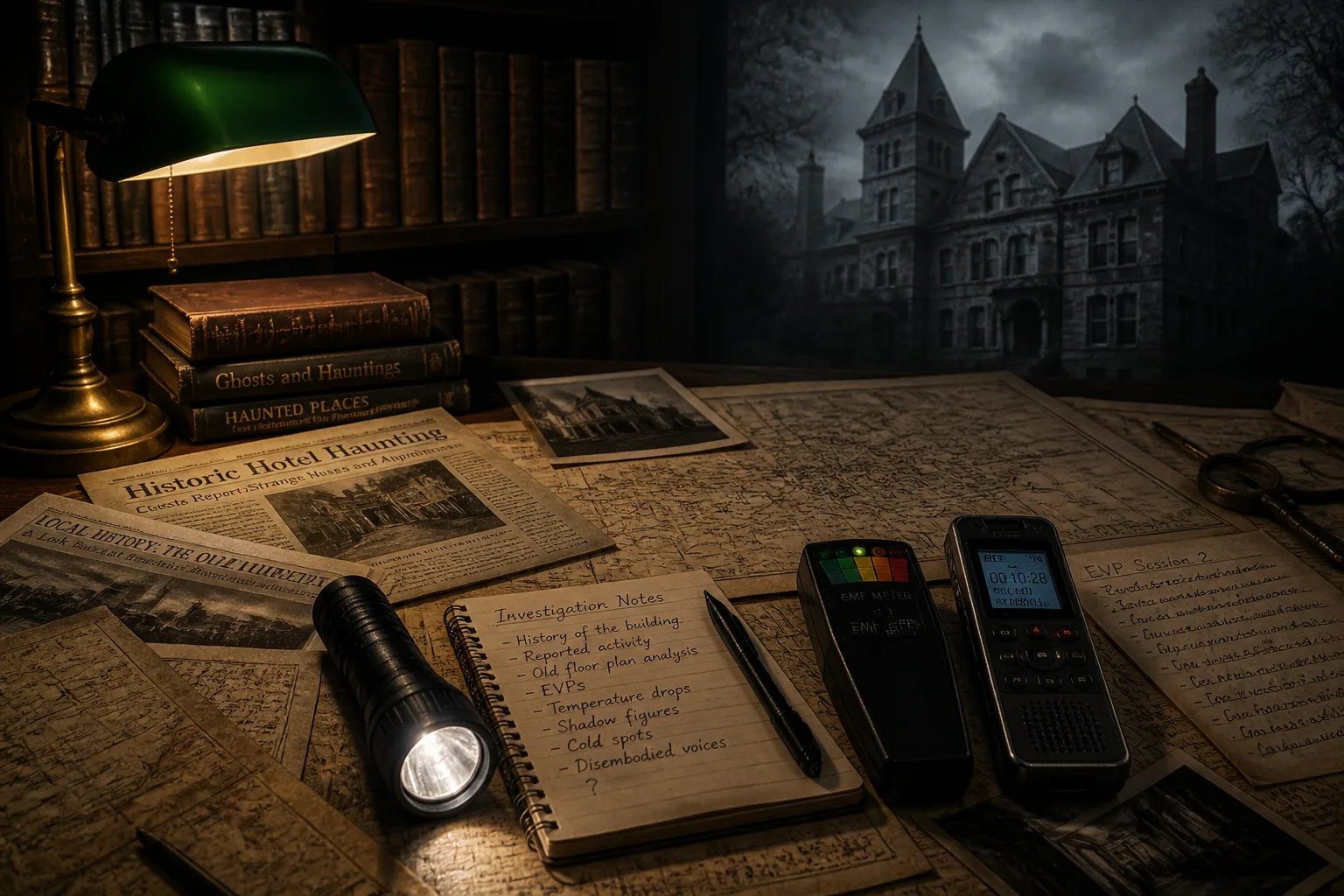
Haunted Histories: How to Research Paranormal Events for More Meaningful Ghost Hunts
A good ghost hunt is not just about chasing strange noises in the dark. It becomes far more compelling when you know the story behind the place. Who lived there? What changed over time? Was there a fire, a tragedy, a renovation, or a rumor that kept getting repeated until it sounded like fact? When you build an investigation on real history, your evidence has more weight, your theories become sharper, and your content becomes much easier to trust and share.
That is the real power of historical research in paranormal investigation. Instead of relying on vague legends alone, you can compare claims with documents, dates, maps, newspapers, and official records. The result is a richer investigation, because every EMF fluctuation, EVP, spirit box response, or unexplained feeling can be measured against a real backstory instead of random speculation.
Why Historical Research Makes Ghost Hunts More Meaningful
Historical research gives structure to a location’s paranormal reputation. A place that is simply called “haunted” often has dozens of possible stories attached to it, and many of those stories may have been repeated so often that they have become detached from the truth. Once you start researching, you can separate a dramatic legend from an event that actually happened, and that distinction makes your findings much more meaningful.
It also helps you investigate with purpose. If you know a building changed hands several times, was expanded in stages, or served different functions over the years, you can focus your questions and observations around those transitions. A hallway that feels active may line up with an older section of the building. A room with recurring reports may have once had a very different use. History gives you a map for your investigation.
The other major benefit is credibility. When you share your investigation online, audiences respond better to evidence that is backed by real context. A story about a spirit box response becomes much more interesting when you can explain that the room belonged to a family identified in census records, or that a local paper reported a fatal accident there decades earlier. The investigation becomes a narrative, not just a clip.
What to Look For in a Haunted Location’s Past
When researching a haunted location, start with the basics. Who owned or occupied the property? When was it built? Did it change names, uses, or boundaries over time? These questions matter because paranormal claims are often tied to specific eras, people, or incidents, and without a timeline you have no way to test those claims.
Look for major events first. Deaths, fires, crimes, illnesses, accidents, renovations, bankruptcies, inheritances, and property transfers can all shape a location’s legend. Even ordinary changes matter. A room used as a bedroom in one decade might have been a storage space in another. If people claim they hear footsteps in a stairwell, you may find that the stairwell was added later, or that it once connected to a separate section of the building.
Also pay attention to who was connected to the property. Census records can reveal who lived there, their ages, occupations, neighbors, household relationships, and sometimes immigration status. That kind of detail helps you understand who may have experienced the events tied to the house and whether the story even matches the people who were actually present. The Pennsylvania Historic Preservation Guide notes that decennial U.S. census records from 1790 to 1950 are especially useful for identifying who lived at a place, when, and in what capacity, while also adding surrounding family and neighborhood context: https://www.pa.gov/content/dam/copapwp-pagov/en/phmc/documents/preservation/national-register/documents/beginner's guide to researching a historic property nr.pdf
Best Reputable Sources for Paranormal History Research
Reliable research starts with reliable sources. Old ghost stories can be interesting, but if you want to build a meaningful investigation, you need materials that can confirm dates, names, and events. The best sources usually include local archives, historical societies, libraries, town and county records, land deeds, maps, city directories, death certificates, and newspaper archives.
Town and county records are especially valuable because they can show what changed and when. Renovation permits, tax records, planning documents, and land transfers often reveal a hidden timeline behind a building’s structure. A property’s chain of title, built from deeds, maps, and land records, can help you trace ownership changes, inheritance, renovations, and the historical use of spaces within the property. That matters because many paranormal claims are attached to a building’s layout, and the layout itself may have evolved over time. PennStory explains that chain of title research can align physical changes in a structure with ownership and use history: https://pennstory.com/property-histories/
Old newspapers are another essential source. They can provide obituaries, reports of accidents, notices of death, local scandals, unusual events, and firsthand references to ghostly activity. GenealogyBank points out that newspapers are indispensable for confirming dates, names, tragedies, and folklore tied to a location, while historic Victorian-era reporting also shows how supernatural stories were reflected in contemporary print culture: https://www.genealogybank.com/blog/researching-old-ghost-stories-haunted-houses-in-newspapers.html and https://www.findmypast.com/blog/discoveries/ghosts-of-the-past-historic-news-reports-of-victorian-hauntings
You should also use census databases and archival finding aids whenever possible. The U.S. Census Bureau offers guidance on searching census records, and those records can help you confirm residents, occupations, and household relationships. That context is often what turns a vague haunting rumor into a grounded historical timeline: https://www.census.gov/data/academy/courses/searching-census-bureau-records.html
How to Use Archives, Newspapers, and Town Records Effectively
The best approach is to build your research in layers. Start broad, then narrow your focus. First, identify the property and its known names over time. Then search for those names in local archives, newspaper databases, census records, and land records. Many locations appear under different addresses or business names, so flexibility matters.
When using archives, take notes on every reference, even if it seems minor. A small mention in a city directory may tell you who occupied the building in a certain year. A short notice in a newspaper may reveal a fire, a family transfer, or a public event that changed the property’s reputation. These fragments can later connect to one another and help you build a timeline.
Town records can be especially useful when paired with physical observation. If you see evidence of additions, sealed-off rooms, or changed entrances, check whether permits, maps, or renovation records match those features. A room that feels unusually active may simply be the oldest surviving section of the building, or it may once have had a function that explains why people report certain sensations there. Historical records can keep you from inventing paranormal explanations for architectural changes.
Newspapers should be read critically. They are invaluable, but they are not always neutral. Some stories were sensationalized, especially when paranormal claims were part of the appeal. That is why it helps to compare newspaper references with official documents. If a paper reports a death, look for a death certificate or coroner’s record if available. If a paper describes a haunting, check whether the article is presenting firsthand reporting, local folklore, or pure entertainment.
Tracing Deaths, Disasters, Ownership Changes, and Renovations
Many haunted-location stories are built around a specific death or tragedy. Researching those claims carefully is one of the most important steps in creating a credible investigation. If a location is said to be haunted by someone who died there, verify the date, the identity, and the circumstances. Death certificates, obituaries, newspaper reports, and local records can help confirm whether the event happened the way people say it did.
Disasters and accidents matter too. Fires, collapses, floods, violent incidents, and public tragedies often become part of a building’s folklore. But the details are frequently distorted over time. A tragic event may be real, but the victim, location, or sequence of events may have been misremembered. Careful research lets you correct the story before it becomes part of your content.
Ownership changes can also be revealing. A building’s reputation may shift after a transfer, especially if a new owner altered the space, used it differently, or unintentionally preserved certain original features. Tracing a chain of title can show whether the haunting legend is attached to the oldest known owner, a later family, or a business era that transformed the property’s identity. In some cases, renovation dates help explain why activity seems concentrated in one wing or one room.
This is where the physical and historical record should work together. If your findings show that a doorway was closed off in a renovation, and witnesses report footsteps from a now-inaccessible corridor, that is interesting. If a basement room was once a kitchen, laundry area, or mortuary space, then repeated activity there may have a practical historical explanation worth exploring before you jump to conclusions.
How Folklore and Local Legends Can Help or Mislead
Local legends are not useless. In fact, they can be one of the best starting points for research because they show what a community remembers, fears, or repeats. Folklore may point you toward a particular room, person, or event worth investigating. A story told by longtime residents can reveal where the strongest emotional associations are located, and that can shape your approach to the site.
But folklore can also mislead you very quickly. Once a story is repeated enough times, details tend to drift. A local ghost may have been attached to the wrong century, wrong name, or wrong cause of death. Sometimes an invented story gets repeated so often that it starts showing up in blogs, social posts, and even tour scripts as if it were documented history.
The key is to treat folklore as a clue, not proof. Ask where the story came from, who told it, and whether an older version exists in newspapers, oral histories, or local archives. If you cannot find evidence, you can still mention the legend, but you should label it clearly as tradition or reported memory rather than fact. That honesty strengthens your investigation more than it weakens it.
Connecting Historical Findings to EMF, EVP, and Spirit Box Evidence
History becomes even more useful when you connect it to field data. If your records show that a specific room was repeatedly altered, occupied by different families, or associated with a major event, you can compare that timeline with EMF readings, EVP sessions, spirit box responses, and temperature or humidity logs. This does not prove a haunting, but it does make your evidence more meaningful.
Environmental context is especially important. Research on perceived EVPs found that they occurred more often during periods of higher humidity or dew point, and with fluctuations in EMF readings, though not always simple spikes. That suggests that logging environmental conditions during an investigation is not optional if you want serious data. The study emphasizes the value of statistical analysis over isolated anecdotes: https://centerpri.org/perceived-electronic-voice-phenomenon-evps-and-environmental-correlation-statistical-analysis-of-a-large-longitudinal-data-set/
If you are recording EVP sessions, be careful about false positives. Methodological controls matter, including shielding from radio-frequency interference, accounting for background noise, and applying a strict test before labeling anything paranormal. ATransC’s guidance on EVP false positives and other discussions of EMF-related recording issues both reinforce the same point: without controls, ordinary sounds and technical artifacts can be mistaken for voices or responses: https://atransc.org/locating-false-positives/ and https://www.paraghosts.com/how-electromagnetic-fields-influence-evp-recordings-in-paranormal-investigations/
This is where a research-backed investigation feels different. If you know a room’s history, you can compare a claimed response to the actual past. Maybe a spirit box word matches the name of a family documented in the census. Maybe a spike in EMF happens in a room that was once rewired during a renovation. Maybe a perceived voice occurs during a shift in humidity rather than a dramatic moment in the story. Historical context helps you ask better questions, and better questions produce better investigations.
If you want a convenient way to record sessions while keeping track of your activity history, you can also use Ghost Detector: Ectify, which combines real-time EMF detection, spirit box and EVP features, and session history in one place: https://findthe.app/ectify-fc72z0
How to Verify Paranormal Claims and Spot Recycled Myths
One of the most common mistakes in ghost hunting is repeating claims that were never verified in the first place. To avoid that, always ask three questions. What is the earliest source? Is it a firsthand account or a retelling? Can the claim be confirmed through an independent record? If you cannot answer those questions, the claim should remain unverified.
Look for signs of recycled mythology. If the same story appears on several websites with nearly identical wording, that is a red flag. If a haunting story is attached to multiple locations, or if the details sound generic enough to fit almost any old building, it may be a borrowed legend. Common recycled myths often include tragic brides, murdered children, hidden burials, or nameless former residents with no traceable records.
A strong verification process usually means comparing newspapers, archives, deeds, census data, local histories, and oral reports. If several sources agree on the broad facts but not the dramatic details, you may have found the real event behind the legend. That is often more interesting than the myth itself because it shows how memory transforms into folklore.
Ethical Research Practices for Sensitive or Tragic Histories
Not every historical event should be treated as ghost-hunt content first and human story second. If a location is tied to recent deaths, violence, cultural trauma, or sacred beliefs, the research must be handled with care. Ethical ghost hunting means obtaining permission, respecting privacy, and avoiding sensationalism around suffering.
The ethical frameworks discussed in sources like Skeptical Inquirer and Haunted Hosts stress informed permission, transparency about evidence limits, sensitivity to recent tragedies, and attention to safety for both investigators and witnesses: https://skepticalinquirer.org/2025/12/ethical-issues-in-ghost-investigation/ and https://hauntedhosts.com/library/explainers/ghost-hunting-ethics-dos-and-donts
That means you should avoid exploiting grief to create dramatic content. If a location has a painful history, present the facts respectfully and only include details that are relevant to the investigation. When possible, focus on the documented context and the people connected to the place rather than turning tragedy into a prop. Ethical research does not weaken the story. It makes the story responsible.
Turning Historical Context Into Better Investigations and Better Content
Historical research improves more than your investigation. It also improves how you tell the story afterward. When you post a clip or compile a case file, you can frame your findings around a timeline, a documented event, or a verified property change. That gives your audience something stronger than a random reaction clip. It gives them context.
For social media, that is a huge advantage. A short caption that ties a spirit box response to a specific family, room, or historical event is far more engaging than a generic “we heard something strange.” People are more likely to trust your work, comment thoughtfully, and share it when they can see that you did the research. Good storytelling starts with real backstory.
The best investigations usually combine three things: documented history, careful field methodology, and honest presentation. History helps you understand the location. Good logging helps you evaluate the data. Transparency helps your audience understand what is confirmed and what remains uncertain. When those three elements work together, your ghost hunts become more than entertainment. They become meaningful investigations rooted in place, memory, and evidence.
