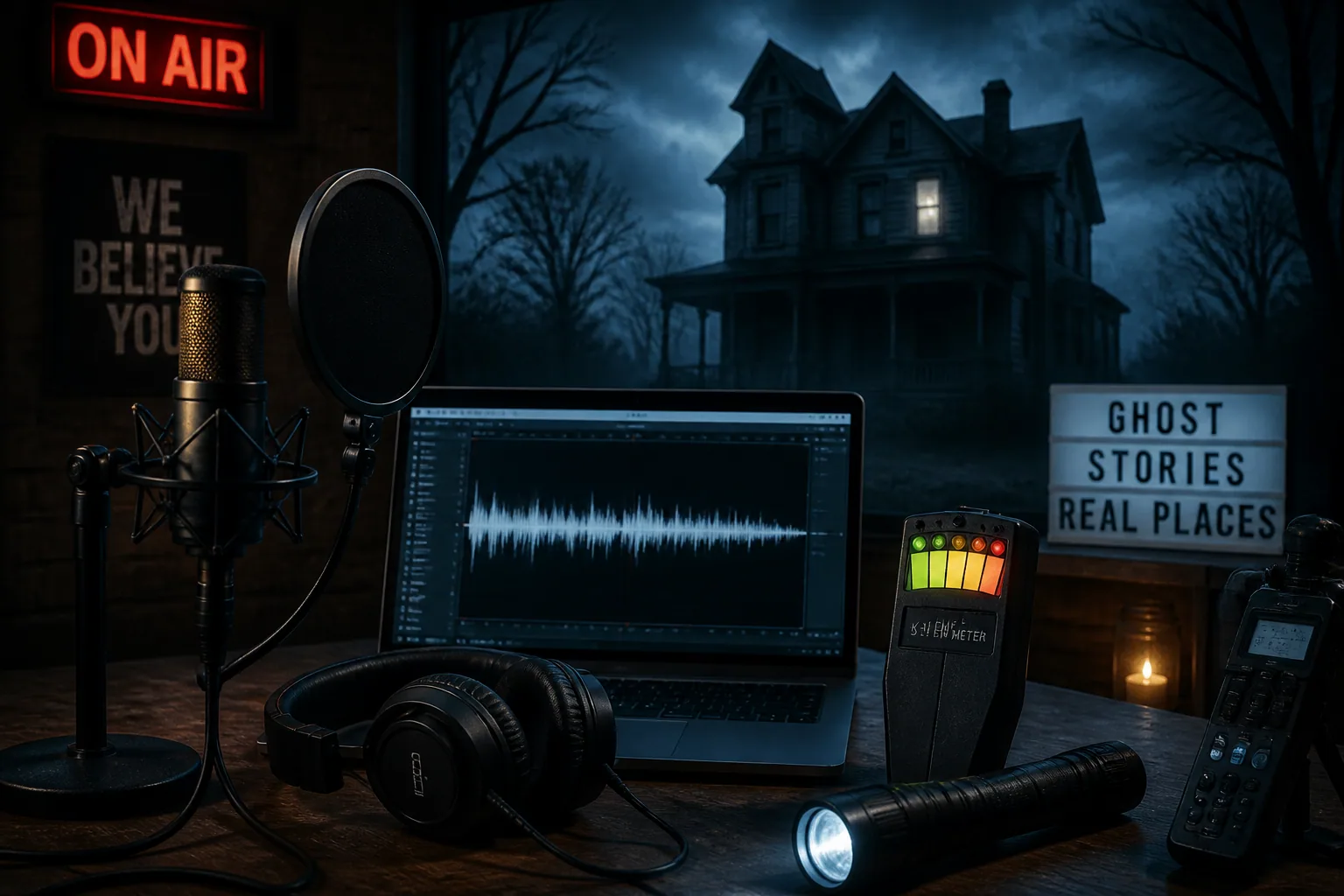
How to Choose the Right Paranormal Investigation Podcast: What Makes a Story Worth Hearing
Paranormal investigation podcasts are easy to start and surprisingly hard to forget. The best ones do more than trade in ghost stories. They create atmosphere, build trust, and keep you leaning in because every detail feels like it might matter. That is what separates a random collection of spooky anecdotes from a show you actually want to follow week after week.
If you are trying to choose what to listen to next, the key is not simply whether the topic sounds frightening. It is whether the podcast knows how to tell a story, how to frame evidence, and how to keep suspense alive without losing credibility. And if you are thinking about making your own show, the same standards matter even more.
Why Paranormal Podcasts Keep Pulling Us In
Part of the appeal is obvious. Paranormal stories tap into uncertainty, curiosity, and the pleasure of asking questions that do not have neat answers. But podcasts add something extra. They let you sit inside the investigation, listening closely as a host walks into a dark building, interviews a witness, or replays a strange sound captured on location.
That feeling of being present is powerful. Research on podcast storytelling shows that scene-setting, ambient sound, and serialized revelation can create deep listening experiences similar to prestige television. In other words, the format itself matters as much as the subject matter. A strong paranormal podcast uses audio to make the unknown feel immediate, not distant. It also helps that voice, pacing, and sound design strongly shape how a show is received and remembered, which makes the listening experience feel almost physical rather than passive.
What Makes a Paranormal Story Worth Hearing
A paranormal story is worth hearing when it gives you more than a headline. You want context, tension, and enough specificity to judge whether the account feels compelling or just recycled. A good episode usually answers several questions at once: Who experienced the event? Where did it happen? What makes this place or moment unusual? What evidence was actually gathered?
The best podcasts do not treat every shadow as proof. They let uncertainty remain part of the appeal. That restraint matters, because once a show starts overstating weak evidence, the credibility starts to collapse. A solid paranormal podcast should feel open-minded but not careless. It should make you wonder, not simply tell you what to believe.
Solo Storyteller, Duo Hosts, or Full Cast: Choosing the Right Format
Podcast format changes everything. A solo host can create intimacy and focus, especially when the show is built around careful research or a single point of view. Pew Research found that deep reporting is the most common narrative format among top-ranked U.S. podcasts, and those shows are much more likely to use a single host. That structure works well for paranormal storytelling because it lets one voice guide the suspense without too much chatter.
Duo-host shows can be fun when the chemistry is strong. A believer-skeptic dynamic, for example, can give the listener two ways to process the same evidence. One host may lean into the eerie possibilities while the other pushes for logical explanations. That back-and-forth can be effective, but only if it stays sharp and does not drift into endless banter.
Full cast productions are less common, but they can be powerful when the show aims for cinematic immersion. They work best when the storytelling is organized and each voice has a clear purpose. As research on podcast directories shows, interview formats are common, co-hosted shows are also widespread, and documentary-style narrative non-fiction is more labor-intensive because it often includes ambient sound, archival audio, and soundtrack elements. If you like atmosphere and immersion, that extra work is often worth it.
Documentary vs Dramatized: Which Style Feels More Credible
Documentary-style paranormal podcasts tend to feel more credible because they show their work. You hear interviews, location audio, archival clips, and a progression of evidence. The episode can still be suspenseful, but the suspense comes from discovery rather than from theatrics.
Dramatized retellings can be entertaining too. They are great at building fear and making a story feel vivid, especially when voice acting and sound effects are used well. The risk is that dramatization can blur the line between actual investigation and performance. If the goal is credibility, a heavily dramatized approach should be transparent about what is reconstructed and what is documented.
A good rule is simple. If the show wants you to believe the case is real, it should give you enough raw material to judge it for yourself. If it is more of a paranormal drama, then the production should embrace that identity honestly. Confusion is what hurts trust.
How to Judge Production Quality in the First Five Minutes
The first five minutes tell you almost everything you need to know. Poor audio quality is one of the fastest ways to lose listeners, and research indicates that bad sound can cause up to 35% higher drop-off within the first five minutes. Edison Research also suggests that people often decide within the first 30 to 60 seconds whether they will keep listening, which means clarity matters more than most creators realize.
Listen for clean vocal levels, minimal background noise, and a structure that gets to the point without feeling rushed. If the intro is muddy, the transitions are abrupt, and the host sounds like they are recording in a tunnel, the episode probably will not improve later. Good production does not have to sound expensive. It just has to sound intentional.
One more thing matters here. Music and sound cues can shape attention. Adobe has noted that music and cues can trigger dopamine release, which helps hold attention and increase engagement. In paranormal podcasts, that means intros, transitions, and subtle backgrounds should support the narrative rather than overwhelm it.
Sound Design, Silence, and Suspense in Supernatural Audio
In paranormal storytelling, silence can be just as important as sound. A pause before a revelation, a quiet hallway recording, or a long stretch of ambient noise can make the listener more alert than any jump scare. Good sound design does not just add effects. It creates tension through contrast.
This is why the most effective episodes often feel immersive without feeling cluttered. You may hear footsteps, distant wind, a creaking door, or a low background hum, but the best creators know when to stop. Too many effects can make a story feel artificial. The point is to heighten attention, not to manufacture evidence.
Modern discussions of podcast psychology emphasize that tone of voice, pacing, and sound design influence how a show is remembered. That is especially true in paranormal content, where mood is half the experience. If every moment is dramatic, nothing feels dramatic anymore.
Why Research Depth Matters More Than Shock Value
Shock value is easy. Real research is harder, and usually more rewarding. A memorable paranormal podcast should understand the history of the location, the timeline of reported events, the local folklore, and any previous investigations that may support or challenge the story. Without that groundwork, even the creepiest episode can feel shallow.
Research depth also keeps the show from repeating the same old claims. Too many podcasts recycle famous legends without adding new context. That can be entertaining once, but it rarely sustains an audience. Listeners can usually tell when a host has read three web pages and called it investigation. A better show explains where the information came from, what is verified, and what remains uncertain.
The deeper the reporting, the more room there is for suspense to develop naturally. Instead of saying, “Something strange happened here,” the host can show how the story evolved, who disagreed about it, and why the evidence is hard to dismiss. That kind of storytelling feels earned.
Interviews, Eyewitnesses, and Raw Evidence: What Adds Real Weight
Nothing gives a paranormal episode more weight than a strong interview. Eyewitness accounts, when handled carefully, can make a case feel immediate and human. A witness does not just tell you what happened. They reveal how it felt, what they noticed first, and what details stayed with them.
Raw evidence matters too, especially when it is presented honestly. That might mean audio from a location, a recording of unexplained noise, or a clip from an investigation with enough context to interpret it. The key is not to overclaim. Raw evidence is powerful because it invites evaluation, not because it magically proves a haunting.
When a show combines interviews with documented research, it becomes easier to trust the host. That trust is crucial in paranormal content because the audience is always asking the same question underneath the episode: is this a story, a theory, or a documented encounter?
The Role of Listener Submissions and Community Interaction
A strong paranormal podcast does not end when the episode is over. Listener submissions can make the show feel alive, especially when fans share their own experiences, photos, recordings, or local legends. That gives the podcast a sense of ongoing discovery rather than a closed archive of episodes.
Community interaction also increases loyalty. Recent theoretical work on the Reciprocal Community Model argues that listener engagement through social media, submissions, and mutual involvement plays a major role in sustained success and community identity. That makes sense in paranormal media, where the audience often wants to compare notes and contribute their own strange encounters.
The smartest shows invite that participation without losing editorial standards. They curate submissions, ask follow-up questions, and make sure the community adds value rather than noise. When done well, the podcast becomes more than a program. It becomes a shared supernatural conversation.
Live Investigations, Social Clips, and Cross-Platform Storytelling
Many of today’s best paranormal podcasts extend beyond the main feed. Live investigations, short-form clips, and behind-the-scenes social posts can turn a single episode into an ongoing experience. This works especially well when the audience can see field clips, hear fragments of audio evidence, or follow a location story as it develops.
Cross-platform storytelling is powerful because it gives listeners different entry points. A full episode may dive deep into a case, while a short social clip might tease one unexplained sound or one witness reaction. Used well, these smaller pieces create anticipation and keep the show in circulation between releases.
The best part is that this approach mirrors how many listeners already discover podcasts. They might hear a clip first, then decide whether the full investigation is worth their time. If the clip promises suspense and the episode delivers substance, the show wins both attention and trust.
Red Flags That a Paranormal Podcast Is Wasting Your Time
There are a few warning signs that a paranormal podcast is all atmosphere and no substance. The first is repetition. If every episode uses the same setup, the same conclusions, and the same dramatic pauses, you are probably hearing recycled content dressed up as fresh investigation.
Another red flag is careless certainty. A host who presents every strange noise as proof of the supernatural is usually selling excitement, not evidence. Be cautious when a show offers no alternative explanations, no source material, and no room for doubt.
You should also be wary of bad editing that makes the episode feel bloated. Long digressions, abrupt cuts, and filler dialogue can drain suspense very quickly. If the first few minutes are already padded, the rest of the episode may not be worth your time.
What Aspiring Creators Can Learn Before Starting Their Own Show
If you want to create a paranormal podcast, the biggest lesson is that attention follows structure. A good story needs a clear angle, a disciplined format, and enough evidence to support the mystery. Listeners will forgive uncertainty. They will not forgive laziness.
You should also think carefully about your voice. Are you trying to be the skeptical analyst, the immersive storyteller, the field investigator, or the host who brings different perspectives together? Each approach can work, but only if it matches your material. Format and tone should reinforce each other.
And do not ignore production basics. Clean recording, consistent levels, good pacing, and purposeful sound design make a much bigger difference than flashy branding. In paranormal content, credibility starts with how the episode sounds.
Using Ectify to Capture Field Audio and Build Better Storytelling
For creators who want to record investigations or collect raw audio evidence, Ectify can make the process easier. It turns your smartphone into a ghost-hunting tool with real-time EMF detection, spirit box and EVP features, session recording, and a history of past investigations. You can learn more here: https://findthe.app/ectify-fc72z0
That kind of tool is useful not because it guarantees paranormal proof, but because it helps you document your sessions in a way that supports better storytelling. When your audio, EMF spikes, and session notes are all captured in one place, it becomes much easier to review material, build episodes, and share selected moments across platforms.
Finding the Paranormal Podcast That Matches Your Taste
The right paranormal podcast depends on what you want most from the experience. If you like intimacy and analysis, a solo deep-reporting show may be your best fit. If you prefer debate and personality, a co-hosted format might keep you engaged. If you want atmosphere and immersion, a documentary-style series with strong sound design can be unforgettable.
The most important thing is to listen for substance beneath the mood. A great paranormal podcast does not just scare you. It builds a world, shows its work, and makes you feel like the mystery still matters after the episode ends. If it can do that, it is probably worth your time.
