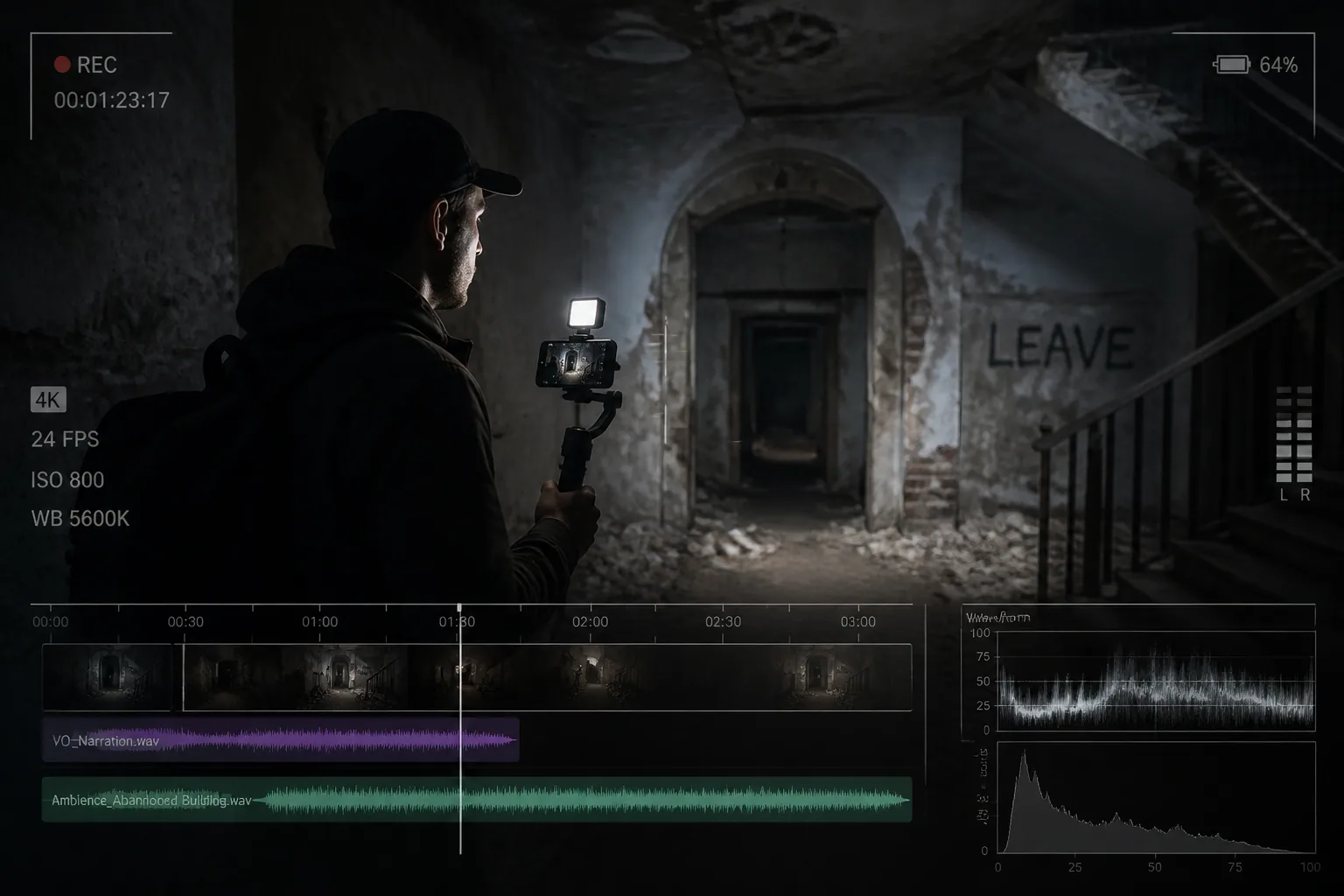
How to Craft Paranormal Content That Engages: Ghost Hunting Videos That Actually Hold Attention
Paranormal content has a built-in advantage: people are already curious. In the U.K., a 2025 national study found that more than 70% of people believe in something paranormal, which shows how broad the audience for supernatural stories can be. At the same time, research on online paranormal media suggests that audiences are not just looking for claims, they are looking for a convincing experience. That means if you want your ghost hunting videos to get watched, shared, and trusted, you need more than a camera pointed at a dark hallway. You need structure, clarity, restraint, and honest storytelling.
This matters even more because paranormal media often leans heavily on alleged evidence. In a 2024 analysis of 50 high-view YouTube videos about hauntings and UFOs, a large majority featured paranormal claims and purported footage, while scientific sources appeared in only about 25% of UFO videos and almost none of the haunting videos. That gap is important. It suggests that creators who want to stand out can do so by being more transparent, more careful, and more intentional than the average upload. Source: Wright, Oittinen & Brewer (2024), https://journals.sagepub.com/doi/10.1089/cyber.2023.0667
Why Most Ghost Hunting Videos Lose Viewers Fast
Most ghost hunting videos lose attention for the same reason many raw recordings do: they feel like unfiltered storage, not a story. Viewers do not want to sit through 25 minutes of walking, whispering, random lens flare, and vague reactions with no momentum. They want a beginning, a build, and a payoff. If the video opens with ten minutes of setup and never creates tension, people leave before anything meaningful happens.
Another reason paranormal videos underperform is that creators often overstate weak moments. If every creak is presented as proof and every shadow as evidence, viewers become skeptical very quickly. Credibility drops when the content feels exaggerated, because audiences are not only watching for entertainment. They are also subconsciously evaluating whether the creator seems honest. Research on source credibility shows that people are more likely to trust paranormal content when the framing feels careful and when uncertainty is admitted rather than hidden. Source: Ramsey, Venette & Rabalais (2011), https://www.tandfonline.com/doi/full/10.1080/15456870.2011.561153
This is why a good ghost hunting video is not just a collection of clips. It is an experience that guides the viewer through a question. What is this place? Why does it matter? What happened here? What do we hear, see, or feel that could suggest something unusual? When you build the video around that question, people stay longer because they want the answer.
Think Like a Storyteller, Not Just an Investigator
If you want better paranormal content, start thinking like a storyteller. That does not mean making things up. It means arranging reality in a way that makes it easier to follow. Every investigation already contains the basic parts of a story: a location, a reason to be there, uncertainty, investigation, and outcome. Your job is to shape those parts so the viewer can experience the tension in real time.
A storyteller asks: what is the hook, what is the threat, what is the turning point, and what changes by the end? In paranormal content, the hook might be a local legend or a strange first impression. The threat is not necessarily danger, but suspense. The turning point is the moment something unusual seems to happen. The end can be resolution, but it can also be ambiguity, as long as the viewer understands what was found and what remains unclear.
That structure matters because narrative form keeps attention. Research on paranormal media has shown that plot-like structure increases engagement, and that setup, tension, and resolution make viewers more likely to stay with the content than a raw stream of footage. In other words, people are not only watching for evidence. They are watching for progression.
How to Structure a Paranormal Investigation for Suspense
A simple way to structure a ghost hunt is to break it into four parts: introduction, setup, escalation, and review. The introduction tells the viewer where you are and why it matters. The setup shows the equipment, the rules, and what kind of activity you hope to capture. Escalation is where you begin testing areas, responding to sounds, or narrowing down the investigation. The review is where you revisit the strongest moments and explain what they might mean.
This structure works because it gives the audience a map. When viewers know where they are in the investigation, they can relax enough to become curious instead of confused. Even if you are recording on a phone, that narrative clarity helps. You do not need a big budget to make an investigation feel professional. You need a clear sequence and a reason for each scene.
A helpful trick is to identify the one or two strongest moments before you begin editing. If you already know where the evidence or tension is likely to appear, you can build anticipation earlier in the episode. You can also pace around those moments more effectively, so the video does not feel flat for too long.
The goal is not to fake suspense. The goal is to let suspense emerge from the investigation itself, then present it in a way the audience can follow. That distinction is what separates engaging paranormal storytelling from chaotic raw footage.
What Footage to Keep and What to Cut
One of the biggest mistakes beginner creators make is assuming that more footage equals more authenticity. It usually does not. Viewers do not need every minute of walking, waiting, or repositioning the camera. They need the moments that advance the investigation or clarify the atmosphere. If a shot does not build tension, reveal context, or support the evidence, it probably belongs on the cutting room floor.
Keep footage that does at least one of these things: sets the scene, introduces a clue, captures a reaction, shows a change in the environment, or helps explain what happened. Cut footage that repeats information, stalls the pacing, or distracts from the main thread. A tighter edit makes the whole investigation feel more believable because it signals that you are curating evidence carefully rather than padding runtime.
That does not mean hiding everything imperfect. In fact, a few raw moments can make your video more credible. Leave in some pauses, some confusion, and some real-time uncertainty. Those moments remind viewers that the investigation is unfolding naturally. What you want to avoid is dead air without purpose.
Teasing Evidence Without Overhyping the Outcome
Good paranormal content often uses a small tease before the reveal. That might mean hearing a sound before showing the location, mentioning an odd reading before replaying the clip, or briefly hinting at a moment that seems hard to explain. This is effective because it gives the audience a reason to keep watching.
The key is moderation. If you overhype every clip, your strongest moments lose impact. Saying “something incredible happened” creates skepticism unless the footage actually supports the claim. A better approach is to be specific. You can say, “We heard a movement in the hallway, so we went back to check the camera,” or “This is the part where the audio changed, and we could not immediately explain why.” Specificity builds trust.
This is also where uncertainty is useful. You do not have to force every moment into a paranormal conclusion. Viewers often respect a creator more when they acknowledge that a scene may have a natural explanation. That honesty makes the truly unusual moments stand out more. It tells the audience that you are not trying to sell them a story at any cost.
Editing Audio and Video Without Damaging Credibility
Editing is not the enemy of credibility. Poor editing is. You can improve pacing, remove dead time, and tighten audio without making the evidence feel fake. The best edits are invisible. They help viewers understand what happened without creating the sense that something was manufactured after the fact.
For video, avoid overly dramatic effects unless they serve a clear purpose. Heavy glitch transitions, artificial jumps, random zooms, and suspicious overlays can make a real moment feel staged. Use simple cuts, clean captions, and occasional slow replays only when they help the viewer inspect the evidence. If something important happens, show the original clip first, then the replay. That sequence preserves trust.
For audio, clarity matters even more. EVP-style moments, whispers, and environmental sounds are easy to mishear if the track is messy. Research on EVP recording best practices recommends using external or directional microphones, recording with more than one device in different places, and minimizing overlapping voices and background noise. Those steps improve both clarity and credibility. Source: https://www.tvi.show/ghost-gear/capturing-evp-best-practices-for-recording-spirit-voices-in-paranormal-investigations
If you need to remove a loud cough, a wind burst, or a long stretch of unusable noise, do it carefully and keep the remaining audio honest. Never clean a clip so aggressively that it sounds unreal. Viewers can usually tell when a recording has been polished beyond recognition.
Labeling Time, Location, and Context So Viewers Can Follow
One of the simplest ways to make paranormal content feel more credible is to label what viewers are seeing. Time stamps, room names, location references, and short context notes help people orient themselves. When a viewer knows that a sound happened at 2:14 a.m. in the east hallway, the moment becomes easier to evaluate.
This kind of labeling also reduces confusion. If you cut from one room to another, tell the audience. If the camera changed, mention it. If a clip comes from a different device, label that too. Good context helps viewers judge whether a strange sound could have come from outside, from another team member, or from a device issue.
Context also protects your credibility. If a video is built around clear timestamps and location tags, it feels less like a bundle of claims and more like a documented investigation. That professionalism matters, especially because paranormal audiences tend to be highly responsive to narrative framing and source cues.
How to Build Trust With Raw Clips and Honest Uncertainty
Raw clips are valuable because they give viewers a look at what actually happened before the editing polished the narrative. But raw footage only builds trust when it is used honestly. If you show a clip and immediately declare it proof, viewers may feel pushed. If you show the same clip and say, “We are not sure what caused this,” they are more likely to stay open.
That is because uncertainty can be a strength. It signals restraint. It tells your audience that you are not afraid of ambiguity, and that you understand the difference between a strange moment and a confirmed paranormal event. This approach also helps your strongest evidence feel stronger, because it is no longer diluted by overclaiming.
The best creators often let the raw clip speak first, then explain what they noticed, what equipment was running, who was present, and what natural causes were considered. That combination of raw evidence and commentary creates balance. It does not tell viewers what to think. It gives them enough information to think carefully.
Using Blind Reviews and Equipment Transparency to Strengthen Claims
If you want your audience to trust your paranormal claims, show them how you tested the evidence. One useful method is a blind review. Have someone else watch or listen to the clip without telling them what you think happened. If they notice the same thing independently, that can be compelling. If they do not, that is also useful information.
Equipment transparency matters too. Tell viewers what camera you used, whether the footage came from a phone or a dedicated device, whether audio was captured on a second recorder, and whether environmental factors could have affected the result. This kind of disclosure does not weaken your content. It strengthens it because it makes your process easier to trust.
Research on paranormal belief suggests that source credibility plays a real role in how content is received. In other words, the more honest and grounded you appear, the more likely viewers are to treat your material seriously. A clear process, an open method, and visible limitations all help with that.
Phone-Based Ghost Hunting Tips for Better Lighting, Framing, and Sound
You do not need expensive gear to make better paranormal videos. A phone can work surprisingly well if you manage the basics. Start with lighting. Phone-based filming benefits from controlling light carefully, avoiding mixed color temperatures, and locking exposure and white balance when possible. Poor lighting creates noise, strange colors, and a lower sense of credibility. Source: Cursa lighting and camera setup guidance, https://cursa.app/en/page/lighting-and-camera-setup-for-phone-based-production
Use a small LED panel or a natural light source as your main light when appropriate. Try to keep the subject and background balanced so the footage is readable without becoming overlit. In dark spaces, the temptation is to crank the brightness and hope for the best, but that often creates grainy footage that is harder to trust.
Framing and stability matter just as much. Even small shakes become very noticeable in vertical or close-framed video, especially when the subject fills most of the frame. A tripod helps, but bracing your elbows against your body or leaning against a stable surface can also improve shot stability. Source: Cursa, https://cursa.app/en/page/lighting-and-camera-setup-for-phone-based-production
Before recording, do a quick checklist: clean the lens, test the light, lock focus, lock exposure if possible, and take a short test shot to check for flicker or focus shifts. A simple preparation routine can dramatically improve how polished the final video feels. Source: Smart Phone Filming Guide, https://content.plconnect.slq.qld.gov.au/sites/default/files/Smart Phone Filming Guide .pdf
For sound, use your phone as part of a broader audio setup when possible. Record room tone, keep voices controlled, and avoid talking over delicate moments. If you are trying to catch EVPs or unexplained sounds, give those moments space to breathe. Audio is often where viewers decide whether a clip feels real or not.
Common Paranormal Content Mistakes That Make Videos Feel Fake
The fastest way to lose trust is to react too strongly to weak evidence. If every small sound becomes a dramatic reveal, viewers will assume the content is staged. The same goes for exaggerated edits, overused jump cuts, and music that tells the audience how to feel before anything actually happens.
Another common mistake is hiding all the messy parts. A video that looks too clean can feel suspicious in paranormal content, because real investigations are imperfect. If every clip is perfectly framed, perfectly lit, and perfectly reactive, the audience may wonder whether the footage was selected or altered too aggressively.
It also hurts credibility when creators ignore obvious environmental causes. Wind, building noise, phone compression, battery issues, and human movement can all affect a recording. If you never mention these possibilities, your audience may think you are avoiding them. Addressing them directly makes your conclusions stronger, not weaker.
Finally, avoid dumping raw clips without explanation. Raw footage can be valuable, but only when it is part of a coherent viewing experience. If people cannot tell what room they are in, what device recorded the moment, or why the clip matters, they are less likely to stay engaged.
A Simple Workflow for Publishing More Watchable Ghost Hunt Videos
If you want a repeatable process, keep it simple. First, plan the investigation around one clear question. Second, capture a few strong scenes instead of endless footage. Third, label the key moments with time, place, and context. Fourth, edit for clarity, not drama. Fifth, include a brief explanation of what you know, what you do not know, and what you ruled out.
This workflow is especially useful for creators who film on their phones or work with a small team. It saves time, reduces confusion, and helps every episode feel more deliberate. It also makes your content easier to trust because viewers can see a consistent process from one investigation to the next.
If you want a simple way to make your phone-based investigations more interactive, a tool like Ghost Detector: Ectify can fit naturally into your setup. It turns your smartphone into an investigation companion with real-time EMF detection, an integrated spirit box and EVP generator, and session recording so you can review and share your findings later. You can learn more here: https://findthe.app/ectify-fc72z0
The larger lesson is that engaging paranormal content is not about pretending to have all the answers. It is about presenting uncertainty in a way people can follow. When you combine story structure, honest labeling, clean sound, stable visuals, and transparent reasoning, your ghost hunting videos become easier to watch and more credible at the same time.
