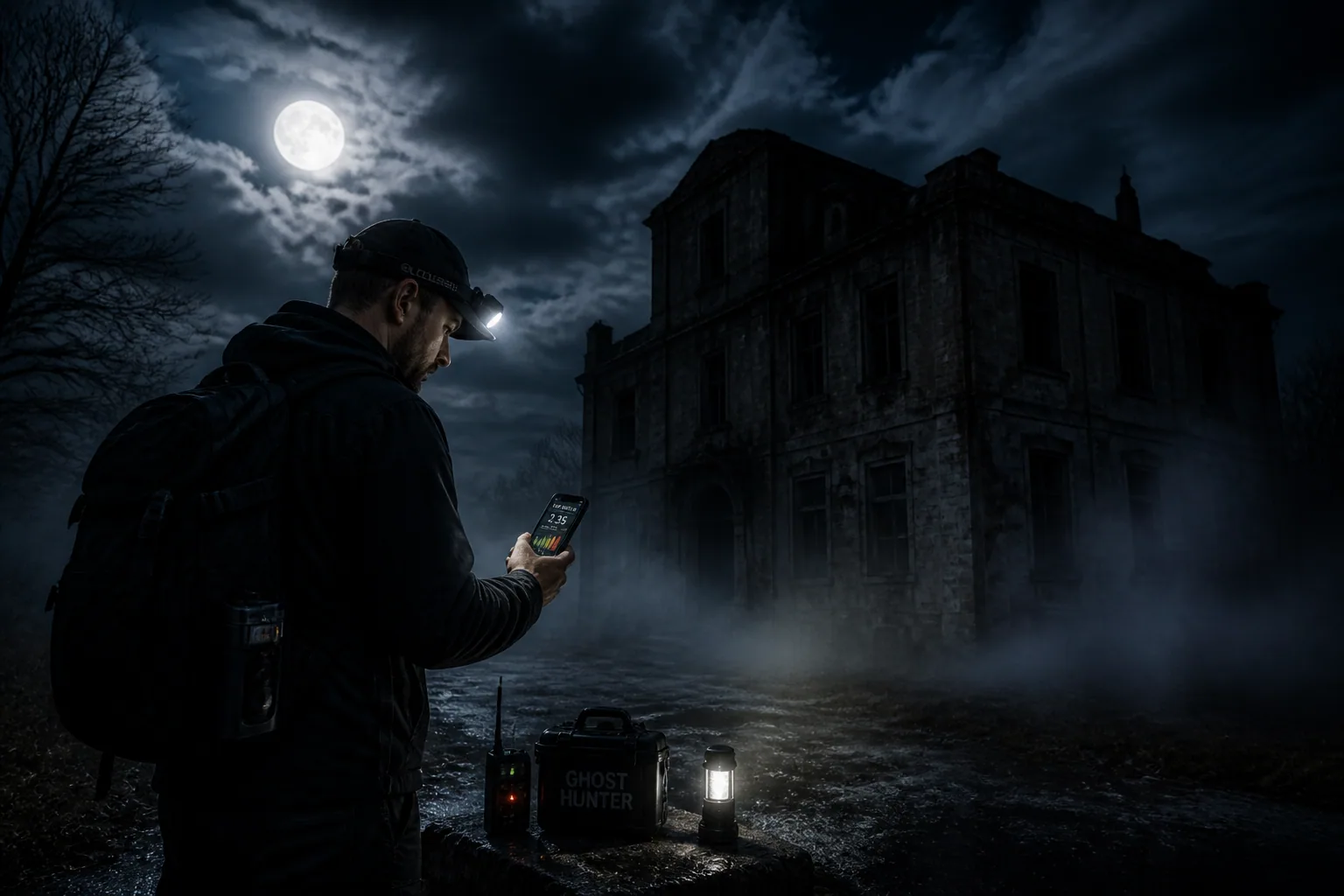
Optimizing Your Ghost Hunt: How Weather, Lunar Phases, and Moonlight Affect Paranormal Investigations
If you have ever felt that one investigation “just had a different energy,” you are probably not imagining the difference, even if the cause is not supernatural. Weather, moonlight, cloud cover, humidity, and temperature can all change what people notice, how they feel, and how equipment performs. That matters in paranormal work because ghost hunting is built on observation, timing, and interpretation. When the environment shifts, so does the reliability of what you see, hear, and record.
This is why the smartest investigators do not just check the address and show up. They look at the forecast, the moon calendar, the site layout, and the gear they are bringing. They also adjust expectations. A wet night may create more odd reflections, more fogged lenses, and more false orbs, while a bright full moon may change mood, visibility, and how easy it is to spot something unusual in the frame. The goal is not to chase perfect conditions. The goal is to understand the conditions well enough to interpret evidence more carefully.
Why Environment Matters in Paranormal Investigations
Paranormal investigations are especially sensitive to context because many of the tools used in the field are reactive, not definitive. EMF meters can respond to wiring, devices, and structural inconsistencies. Audio recorders can capture wind, moisture, and human movement. Cameras can be fooled by dust, mist, flash reflection, and bright light sources. On top of that, the investigator is part of the instrument too. Stress, fatigue, darkness, and expectation can shape what seems meaningful in the moment.
That is why environmental awareness is not a side note. It is part of evidence quality. A location that feels “more active” on a cold damp night may not be more haunted at all. It may simply be a place where people are more alert to odd sensations, more likely to hear ambiguous sounds, and more prone to misread visual artifacts. In other words, the environment can amplify both experience and error.
This idea shows up repeatedly in ghost-hunting reports. Popular paranormal literature and surveys often associate high humidity and low ambient temperatures with more spontaneous reports of activity, and the Center for Research and Inquiry found that perceived EVP occurrences were strongly correlated with increases in humidity and dew point, while wind and temperature changes did not show a significant correlation in that study: https://centerpri.org/wp-content/uploads/2020/02/PerceivedElectronicVoicePhenomenon.pdf
How Weather Shapes Perception and Equipment Performance
Weather affects paranormal investigations in two major ways. First, it changes human perception. Second, it changes the behavior of equipment. Those two effects often interact, which is why a rainy or windy session can feel both more dramatic and less trustworthy at the same time.
On the perception side, poor weather can heighten anticipation. Rain on windows, gusting wind, and a temperature drop all make a location feel more isolated and intense. That can increase focus, but it can also increase suggestibility. People become more likely to interpret ordinary sensory input as unusual, especially in low-light environments where the brain has fewer visual cues to resolve uncertainty.
On the equipment side, weather can influence everything from microphone performance to battery life. Moisture can make audio less crisp, fog can blur lenses, and cold can reduce battery output. Even if a device is working correctly, the conditions around it may make its results harder to interpret. The best investigators assume that every reading needs environmental context before it becomes evidence.
Humidity, Rain, and Fog: When Moisture Changes the Hunt
Humidity is one of the most important weather variables to watch because it affects both sensation and recording quality. High humidity can make the air feel denser, increase the chance of condensation, and slightly alter how sound travels. In practice, that may mean more muffled audio, more difficulty identifying soft sounds, and more equipment that needs careful handling.
From a paranormal perspective, humidity is especially relevant to EVP work. The research from the Center for Research and Inquiry found a strong correlation between perceived EVP occurrences and humidity or dew point. That does not prove a supernatural cause, but it does suggest that damp conditions may be associated with more reports or more convincing ambiguous audio. Whether that is due to acoustics, expectation, or another factor, it is worth taking seriously when reviewing sessions.
Rain and fog can create similar issues. They increase the risk of false orbs, lens flare, and reflections, especially if you are using a flashlight, lamp, or camera flash. The Orb Connection notes that false orbs are common in mist, rain, snow, wind, or dusty conditions, particularly when bright light sources are present: https://www.theorbconnection.com/orbs/false-orbs/
If you are going out in wet weather, protect your gear and slow down your review process. Check whether a sound is actually paranormal or just rain hitting a nearby surface. Inspect each photo for droplets, backscatter, and illuminated moisture particles. In damp environments, a little skepticism goes a long way.
Wind, Cold Snaps, and Barometric Pressure Effects
Wind is one of the easiest environmental factors to underestimate because it seems obvious only after it becomes disruptive. Strong wind can produce false audio, shake tripods, move loose objects, and make it difficult to hold a steady recording device. In outdoor investigations, wind can also add low-frequency noise that masks subtle voice-like sounds. Even when wind does not directly create false evidence, it can make evidence much harder to analyze.
Cold snaps create a different problem. Low temperatures can reduce battery performance, causing devices to drain quickly or behave inconsistently. That matters for ghost hunting apps, audio recorders, EMF detectors, and spirit box sessions alike. If a device starts cycling oddly or shutting down faster than usual, the cold may be the real explanation rather than a supernatural one. Field reports from hobbyists consistently note that cold weather can shorten battery life and make electronics less reliable.
Barometric pressure is also worth tracking, even though it is often discussed more in folklore than in hard evidence. Many investigators feel that pressure changes coincide with more intense nights, and some field training materials suggest that geomagnetic storms and lunar timing may overlap with increased disturbances. Paranormal 101 materials from LA Spirits recommend investigating about three days before and after a full moon: https://www.laspirits.com/PDFs/Paranormal101/MoonPhases.pdf
The useful takeaway is simple. Weather trends matter less as a mystical rule and more as a reliability filter. If the pressure is dropping, the wind is high, and the temperature is falling fast, your evidence collection needs more caution, not more excitement.
Moon Phases and the Psychology of Paranormal Experiences
Moon phases are one of the most debated variables in paranormal work because they sit at the intersection of folklore, perception, and behavior. Some investigators swear that the full moon changes the atmosphere of a site. Others see moon talk as coincidence dressed up as pattern recognition. The reality is probably more nuanced.
A major point to keep in mind is that large-scale meta-analyses generally do not find a statistically significant effect of lunar phases on violent behavior, psychiatric admissions, or crime. However, sleep disruption around full moons has been observed, including going to bed later, shorter sleep duration, and less deep sleep. That means the moon may not be “causing” bizarre events directly, but it can still influence the humans doing the investigating by affecting sleep and alertness.
That matters because tired people mishear more, see patterns faster, and become easier to suggest to. A moon phase that disrupts sleep can therefore change the quality of an investigation even if it does nothing paranormal at all. A group that arrives sleepy, overstimulated, or already primed to expect activity may report more events simply because their threshold for interpretation has changed.
At the same time, some field reports and long-running site studies do suggest moon-phase clustering in reported haunt activity. A 26-year study of 723 unique reports at Port Arthur Historic Penal Colony in Tasmania found a significantly higher frequency of reports around the two-day periods surrounding both new moon and full moon phases: https://www.parapsychologypress.org/jparticle/jp-83-2-193-207
Full Moon vs New Moon: Visibility, Mood, and Reported Activity
The full moon and new moon create very different investigation conditions. A full moon provides natural light, easier navigation, and better visibility of surroundings. That can be an advantage for safety and for spotting movement in open spaces. It also changes the feel of the night. Some teams find full moon sessions more alert and active, while others find them less eerie because the landscape is more visible and less ambiguous.
A new moon does the opposite. It produces darker conditions, which can be excellent for atmosphere and sometimes better for capturing subtle light anomalies, but it also increases uncertainty. People are more likely to mistake distant lights, reflective surfaces, or motion in the dark for something unusual. The new moon can make a location feel more intense because the human brain has less visual information to stabilize what it is experiencing.
Interestingly, the Port Arthur study found elevated reports near both full and new moons, which suggests that brightness alone is not the whole story. It may be that different moon phases alter behavior, scheduling, or attention in different ways. In practice, that means you should choose moon phase based on your objective. If you want maximum visual clarity and safer movement, a brighter moon may help. If you want darker conditions for atmosphere and certain types of light-based tests, a new moon may be preferable.
How Moonlight and Cloud Cover Affect Cameras and Visual Evidence
Moonlight does more than brighten a scene. It changes contrast. A brighter sky reduces the separation between foreground and background, which can make faint visual phenomena harder to notice by eye. That said, moonlight can actually help cameras if the exposure settings are optimized correctly. Optical Mechanics notes that brighter moonlight can allow shorter exposure times and better image quality when lens and settings are adjusted properly: https://www.opticalmechanics.com/seeing-vs-transparency-master-your-sky-conditions/
This creates a useful tradeoff. The full moon can improve technical capture while making the scene feel less mysterious and less visually dramatic. The new moon can create a more compelling atmosphere, but it also makes focus, framing, and object identification more difficult. Cloud cover adds another layer of complexity by either diffusing moonlight or eliminating it altogether. Thin cloud can soften harsh highlights, while thick cloud can create near-total darkness and increase the chance of motion blur or focus errors.
If you are filming or photographing, check your camera settings before you start. Use test shots to confirm exposure, ISO, and white balance. In low-light conditions, even small reflections can become misleading if they are captured with the wrong settings. More light is not always better, but more control usually is.
Reducing False Positives in EMF, EVP, and Spirit Box Sessions
False positives are the biggest threat to credible paranormal evidence. EMF readings can spike because of wiring, electrical appliances, or structural features. High or fluctuating readings are not automatically meaningful unless you have established a baseline. Haunted Hosts points out that EMF meters respond to artificial and naturally varying electromagnetic fields, and that location-specific infrastructure can heavily influence readings: https://hauntedhosts.com/library/explainers/what-is-an-emf-meter-and-why-do-ghost-hunters-use-them/
That is why the first step in any investigation should be baseline testing. Walk the area before active sessions, note where readings rise and fall, and look for repeatable patterns near outlets, metal fixtures, power lines, and devices carried by the team. If a spike appears only when someone moves a phone closer to the meter, that is not an event. It is a source.
EVP and spirit box sessions also need environmental control. Humidity, wind, and rain can create audio artifacts or mask voice-like sounds. Cold can affect recording consistency and battery output. If you do not note the conditions during the session, it becomes very hard to separate an unusual response from ordinary interference. The more environmental detail you collect, the better your later analysis will be.
A good rule is to treat every odd result as a hypothesis, not a conclusion. Ask what the weather was doing, where the device was placed, how long it had been running, who was nearby, and whether the site had any natural or electrical sources that could explain the reading. Careful elimination is what turns a spooky moment into useful evidence.
How to Plan Investigations with Weather and Moon Forecasting Tools
Planning an investigation starts before the drive to the site. Check the weather forecast for rain, wind, humidity, temperature, and pressure changes. Then check a moon calendar for phase, rise, and set times. Combining those two tools gives you a much better idea of what kind of night you are likely to have.
If your goal is photography or video, a brighter moon and clear skies may be ideal, especially if you want safe movement and cleaner imagery. If your goal is to test whether a site feels different under darker conditions, schedule around a new moon or heavy cloud cover. If your goal is to compare evidence quality across conditions, document multiple sessions under different environmental setups so you are not relying on one night to tell the whole story.
It can also help to keep a simple investigation log with weather notes, moon phase, start and end times, battery issues, and any equipment problems. Over time, this creates your own field database. You may discover that certain sites are easier to investigate in dry weather, or that your team reports more anomalies when sessions run late on colder nights. Even if the pattern is not paranormal, it is still valuable.
What Gear to Bring for Wet, Windy, or Low-Light Conditions
The right gear makes a huge difference when the weather turns difficult. In wet or humid conditions, bring lens cloths, waterproof cases, silica gel packs, and a way to shelter audio gear during setup and review. In windy conditions, use stable tripods, secure loose cables, and consider wind protection for microphones. In cold weather, pack spare batteries and keep electronics insulated whenever they are not in use.
For low-light sessions, headlamps with red-light modes can help preserve night vision while reducing glare. Small flashlights are useful for safety, but be careful about how often you use them because bright light can create reflections, false orbs, and visual confusion in the frame. If you are filming, test your camera’s low-light behavior before the actual investigation so you know how it handles shadows, motion, and exposure shifts.
It is also wise to bring practical backups. A paper note sheet, a fully charged power bank, spare memory storage, and a dry bag can save an investigation when weather turns suddenly. A haunted location is exciting. A ruined session because of preventable gear failure is not.
Best Practices for Using Ectify in Different Conditions
If you want a simple way to keep your sessions organized while still capturing environmental context, Ghost Detector: Ectify can help. It uses your phone’s real hardware sensors for real-time EMF detection, includes a spirit box and EVP generator, and records each session so you can review what happened later. You can learn more here: https://findthe.app/ectify-fc72z0
In wet or humid conditions, Ectify can be especially useful because you can keep your investigation in one place while tracking changes in the magnetic environment and recording the session for later review. The key is to note the weather at the time of each spike or response. If humidity is high and the audio is muddy, having a full recording gives you more context when you revisit the evidence.
In cold weather, monitor battery usage closely. Since low temperatures can reduce device performance, it is smart to keep your phone charged and warm before starting a session. If the app behaves inconsistently, do not assume that every glitch is paranormal. Check whether the device itself is struggling with the environment first.
In low-light conditions, Ectify’s session history and recording features are helpful because you can document exactly when EMF changes, responses, and other moments happened. That makes it easier to compare evidence later against weather, moon phase, and site conditions. The more complete your record, the easier it is to distinguish a real pattern from a one-night coincidence.
Building a Smarter, Safer, and More Credible Investigation Routine
The best ghost hunters are not the ones who chase the strangest night. They are the ones who understand how to read the night. Weather, lunar phases, moonlight, and cloud cover do not just create atmosphere. They influence attention, visibility, battery performance, audio clarity, and the likelihood of false positives. Ignoring those factors can make a session feel dramatic, but it also makes the evidence weaker.
A smarter routine is simple. Check the forecast. Check the moon phase. Pack for the actual conditions. Establish baselines. Record your environmental notes. Review every piece of evidence with skepticism and curiosity at the same time. That approach will not remove the mystery from paranormal investigation, but it will make your findings more credible and your sessions safer.
And that is the real advantage. When you learn how weather and moonlight shape the hunt, you stop relying on guesswork and start building a repeatable process. Whether you are exploring a notorious haunted site or recording solo for social media, that process helps you capture better evidence, avoid obvious false positives, and make every investigation count.
