Shadow Stories & Haunted Things: Why Everyday Objects Feel Paranormal
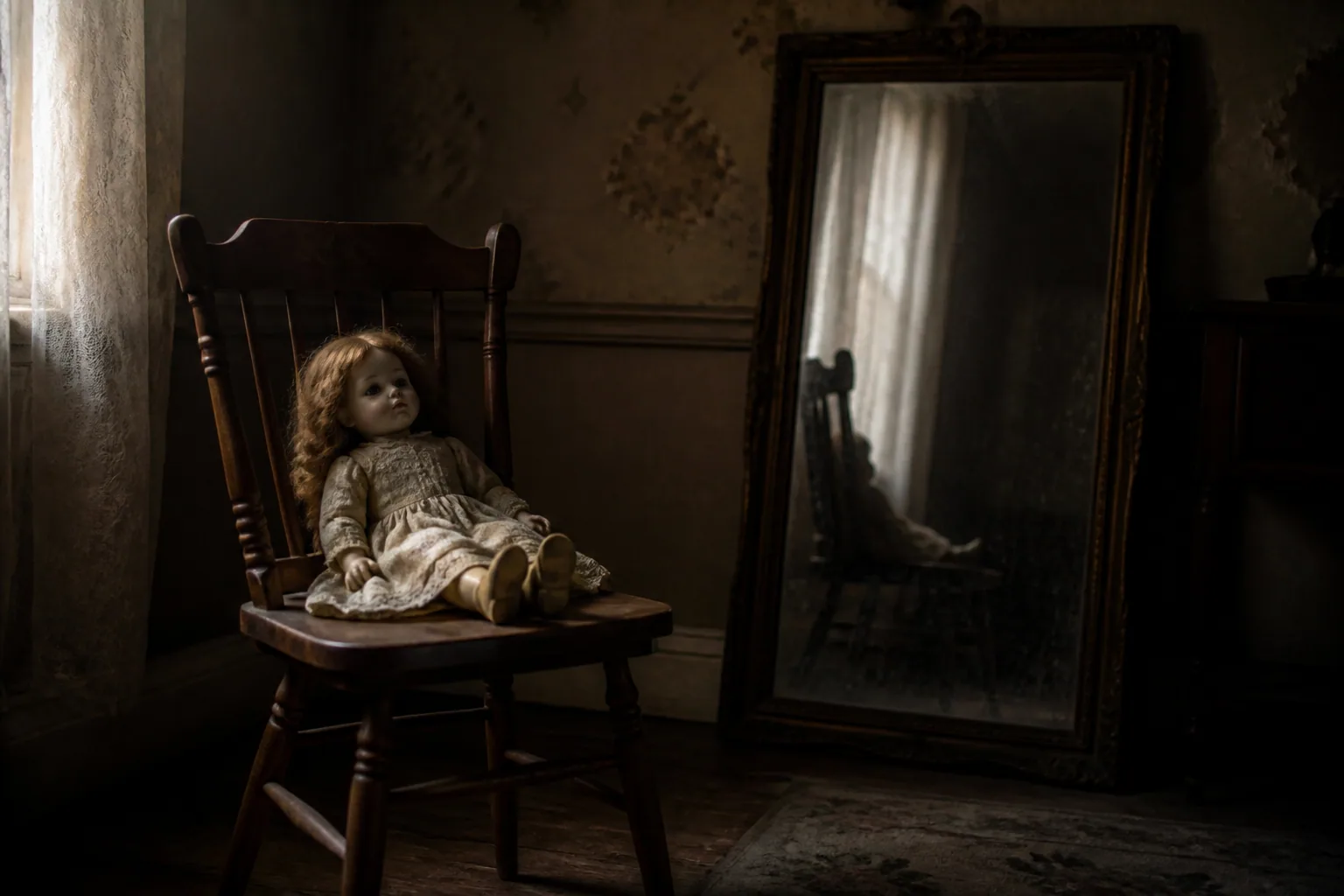
Why do so many ghost stories return to the same kinds of things, like dolls, mirrors, old chairs, family heirlooms, and antiques? It is a pattern that shows up again and again in folklore, investigations, and personal accounts. The answer is not simply that these objects are “haunted.” More often, they are loaded with memory, symbolism, expectation, and atmosphere. In other words, an ordinary object can start to feel like a character the moment our brains, emotions, and cultural stories begin to fill in the gaps.
That is what makes haunted object stories so compelling. They live in the space between psychology and folklore, between a legitimate feeling and an uncertain interpretation. For paranormal enthusiasts, this can be the most interesting place to investigate. For skeptics, it is where bias and perception become visible. And for creators, it is where the best stories are built, not through empty sensationalism, but through careful observation, context, and honesty.
Why Ghost Stories Keep Returning to Objects
Ghost stories often center on objects because objects are easier to anchor than a vague sensation. A room can feel strange, but a mirror that seems to “watch” you gives that feeling a face. A doll with worn paint can seem more unsettling than a shapeless idea. A ring passed down through a family can carry grief, memory, and identity in a way that a general haunted house story cannot. Objects make the invisible feel specific.
They also act as containers for human meaning. A house may be empty, but a trunk in the attic still suggests the presence of the past. A toy left on a shelf can remind us of childhood, loss, or neglect. In paranormal storytelling, that symbolic weight matters. The object becomes a shortcut for emotional history, which is one reason it is so often treated like an active participant instead of a passive thing.
Folklore reinforces this pattern. Across cultures, everyday items are treated as vessels for protection, memory, or spiritual force. In post-medieval Britain, people hid shoes, broken pottery, and dead cats in walls, chimneys, and roofs as protective rituals against witches or evil spirits, showing how mundane objects could be given supernatural purpose through belief and practice: https://www.londonmuseum.org.uk/blog/lauderdale-house-witchcraft-relics-hidden-in-the-wall/
Why the Brain Turns Things Into Characters
The human brain is built to detect agency. We are constantly asking whether something caused a sound, whether a shape is a person, whether a movement means danger. That survival instinct can become a very powerful storytelling engine when we encounter an object in a dim room, in silence, or in a place with a strong emotional history. A chair is just a chair until our minds start assigning it intent.
One reason this happens is pareidolia, our tendency to see patterns or familiar forms in ambiguous input. The same mechanism can make faces appear in shadows or figures emerge from static. Research on sensory-processing sensitivity found that people who identify as highly sensitive show greater ability to detect patterns in ambiguous stimuli and report more anomalous or paranormal experiences, especially under priming conditions. That means the more attention and expectation a person brings to a scene, the more likely the scene is to feel meaningful: https://pmc.ncbi.nlm.nih.gov/articles/PMC9473424/
Expectation matters a lot. In one study of electronic voice phenomena, participants who were primed to expect ghost voices were significantly more likely to report hearing voices in white noise than those told the study concerned voices in noisy environments. That is a useful reminder for haunted object cases. If someone already believes a doll is eerie, every creak, shadow, or flicker around it becomes more convincing because the brain is actively looking for confirmation: https://pmc.ncbi.nlm.nih.gov/articles/PMC9473424/
There is also the issue of attachment. Research on adult attachment style and paranormal belief suggests that people with fearful or preoccupied attachment styles tend to show stronger beliefs in superstition, spiritualism, and precognition. Emotional attachment patterns can shape how easily we interpret an object as charged with presence, memory, or intention: https://research.brighton.ac.uk/en/publications/investigating-the-relationship-between-adult-attachment-style-and/
The Folklore of Dolls, Mirrors, Heirlooms, and Antiques
Some objects appear in haunted stories so often that they feel almost archetypal. Dolls are one of the clearest examples. They are human-shaped, but not human. That small gap is enough to make them uncanny. Their eyes do not truly look back, and yet they seem capable of it. Their faces can hold expression without being alive, which makes them perfect vessels for projection.
In Japanese folklore, tsukumogami are household objects that become animated spirits after a hundred years. Dolls, tea kettles, tools, and other worn domestic items can turn into beings with personalities of their own. These tales reveal something important about age, utility, and neglect. The more familiar an object becomes, the more easily it can be imagined as inhabited by memory or spirit. Folklore often gives language to that feeling: https://www.llewellyn.com/journal/article/3258
Mirrors also recur because they mediate identity. We use them to check ourselves, but they also turn the familiar self into an image that can feel slightly separate. That small distance has always made mirrors ideal in ghost stories. Heirlooms, meanwhile, are powerful because they carry family history. They are not just old. They are relational. They belong to someone, came from someone, and often outlast someone. That makes them emotionally dense even before any paranormal claim enters the picture.
Antiques and vintage objects add another layer: age. An object that has survived decades or centuries seems to hold residue from other lives. Cultural storytelling makes that feeling stronger. In many regions, found objects in historic homes were interpreted through ritual and superstition. For example, a dead cat stuffed into a sealed alcove with herbs behind a chimney was documented as an apotropaic charm, a protective object rooted in folk belief: https://www.history.com/articles/colonial-superstition-why-witch-bottles-dead-cats-were-stuffed-into-walls
Even broken objects could be considered more potent. In hidden object rituals, broken items were sometimes deliberately used because their jagged forms were believed to better trap or ward off negative forces. That idea shows how destruction itself can become meaningful. An object does not need to be pristine to matter. Sometimes damage is part of why it feels charged: https://www.londonmuseum.org.uk/blog/lauderdale-house-witchcraft-relics-hidden-in-the-wall/
How Memory, Grief, and Personal Attachment Shape Perception
One of the strongest reasons an object feels haunted is that it is tied to someone we know, loved, feared, or lost. Personal possessions are not neutral. They become extensions of the self, especially when they are associated with routines, identity, or emotional dependence. In consumer psychology, objects near unreliable or absent people can become stronger emotional surrogates, acting as self-extensions that compensate for loss or inconsistency. That helps explain why heirlooms and personal keepsakes can feel almost alive with presence: https://kuscholarworks.ku.edu/bitstreams/0a39cb7d-fe82-45fb-a9a6-2127c7b463e8/download
Grief can intensify this effect. After a loss, a room can feel different not because the object changed, but because our relationship to it changed. A lamp becomes the lamp they always used. A coat becomes a trace of their body. A mirror becomes a place where their reflection used to be seen. The object becomes a stand-in for absence, which can be emotionally powerful enough to feel paranormal.
This does not mean the experience is fake. It means it is human. Our brains are not only recording facts. They are continuously building stories around attachment, loss, and continuity. The more emotionally significant the object, the more likely it is to absorb feelings that would otherwise remain unspoken.
Environmental Triggers: Lighting, Silence, Architecture, and Mood
A haunted object rarely exists in a vacuum. Context matters. Lighting can soften edges and create ambiguous shapes. Silence can make every small sound feel intentional. Architecture can frame an object in a way that gives it prominence, especially in old homes where narrow halls, high ceilings, and dim corners encourage focus. Mood changes interpretation just as much as the object itself.
This is why investigations often feel stronger at night. Not because nighttime proves anything supernatural, but because less visual information means more room for the mind to speculate. If a room is quiet, the object seems more present. If the air is cold, the object seems more isolated. If a hallway echoes, the object seems to be surrounded by unseen movement. Atmosphere is part of the experience, and it can amplify the impression that an item is active.
This is also where “feel” and “fact” can separate. You may genuinely feel watched by a mirror or uneasy near a crib or doll, but the feeling can be driven by environmental cues rather than paranormal activity. Responsible investigation starts by acknowledging both possibilities instead of rushing to the most dramatic conclusion.
Common Investigation Biases Around Haunted Objects
Haunted object claims are especially vulnerable to bias because objects are so easy to frame as evidence. If a gadget beeps near an antique cabinet, the cabinet gets blamed. If a voice recording contains a distorted syllable, the object nearby becomes the centerpiece of the story. But a story that already wants to be paranormal will often interpret ambiguity as confirmation.
Confirmation bias is one of the biggest issues. Paranormal gadgets can encourage it. In one investigation of a spirit communication device, researchers found that when devices triggered unintentionally, people were more likely to interpret the disturbance as paranormal once obvious natural explanations were exhausted. That pattern matters because it shows how quickly uncertainty can become narrative: https://skepticalinquirer.org/exclusive/investigating-a-spirit-communication-device-a-cat-toy/
The same logic applies to EVPs, odd temperature shifts, EMF spikes, and object movement. Before concluding that a haunted object is responsible, it helps to ask basic questions. Was the object stable? Was the room vibrating? Were there nearby electronic sources? Was the recording setup consistent? Was the experience repeated under controlled conditions? If the answer is no, the object may still be meaningful, but the claim remains unverified.
That does not make the experience less interesting. In fact, it makes it more useful. The goal is not to strip away wonder. The goal is to separate personal impact from evidentiary certainty.
How to Document Object-Related Claims More Credibly
If you want a haunted object story to hold up, documentation matters. Start with context. Record where the object came from, who owned it, when it was acquired, and what events or feelings are associated with it. Write down the first time anything unusual happened and what exactly was observed, not just what it seemed like in the moment.
Then focus on repeatability. One eerie evening is a story. Multiple observations under similar conditions are data. If an object seems to trigger sensations, document the environment carefully. Note lighting, sound, temperature, device placement, and who was present. If you are filming or recording, keep the setup consistent so later viewers can understand what changed and what did not.
Also separate first-person impressions from external observations. It is completely valid to say, “I felt uneasy near this mirror.” It is more credible than saying, “This mirror is definitely haunted,” unless you have something far stronger than a feeling. Clear language builds trust, especially with audiences who are tired of exaggerated claims.
If you are using tools to enhance your investigation, make sure you understand what they are doing. For example, a smartphone-based app like Ghost Detector: Ectify can turn your device into a session recorder with EMF-style readings, EVP-style responses, and shareable audio logs. Used carefully, it can help creators capture atmosphere and organize sessions in one place: https://findthe.app/ectify-fc72z0
Separating Storytelling From Sensationalism
A good haunted object story does not need to declare certainty at every step. In fact, the strongest stories often gain power from restraint. If you describe the object, the setting, and the emotional context clearly, the audience can feel the unease without being told what to believe. That is usually more effective than shouting that every flicker proves a spirit.
Storytelling becomes more compelling when it respects ambiguity. An antique chair can be framed as a witness to generations. A doll can be presented as a childhood artifact that now feels altered by time and gaze. A family ring can be described as a symbol of continuity and loss. None of that requires false claims. It only requires attention to the way people experience objects.
Sensationalism often flattens the experience into a gimmick. Responsible storytelling keeps the mystery intact while admitting what is known and what is not. That honesty does not weaken the story. It makes the story more believable.
How Content Creators Can Share Haunted Object Stories Responsibly
Creators have a unique challenge. Haunted object content performs well because it is visual, compact, and emotionally immediate. But that also makes it easy to overstate evidence or edit a session into something more certain than it really was. If you want your content to feel authentic, show the process, not just the conclusion.
That means including setup, context, and skepticism where appropriate. Show where the object came from. Explain any prior history. If a creepy moment happens, include the moments before and after it, not just the single most dramatic clip. If there is a natural explanation, mention it. Audiences tend to trust creators more when they can see that the creator has thought critically, not just theatrically.
It also helps to avoid exploiting grief. Many object stories involve heirlooms, deceased relatives, or emotionally loaded spaces. Be careful with framing. A family keepsake is not a prop. A dead person’s belongings are not just content. The best creators understand that responsibility and still find ways to make the story compelling through tone, atmosphere, and detail rather than exaggeration.
If you are posting to social media, short-form video can work well for object-centered stories because it lets you build suspense quickly. Just keep the claim clear. Say what you experienced, what you recorded, and what remains uncertain. That balance is what makes the content feel grounded instead of manufactured.
What Haunted Objects Reveal About Us
Haunted objects are never only about the objects. They reveal how people make meaning out of memory, absence, age, and uncertainty. They show how the brain searches for patterns, how culture teaches us what to fear, and how grief can transform a small item into a vessel for presence. Whether an object is truly paranormal or not, the human response to it is real.
That is why these stories endure. A haunted doll, mirror, or heirloom gives us a way to talk about the things we cannot easily explain. It can stand in for a lost person, a buried memory, a family secret, or a feeling that refuses to settle. The object becomes a narrative anchor for something much larger than itself.
In the end, haunted objects may tell us less about ghosts and more about the human need to turn matter into meaning. We do not just see things. We remember through them, fear through them, and sometimes grieve through them. That is why the most ordinary objects can feel like they are carrying a story. In many ways, they are.
