The Hidden Health Risks of Ghost Hunting: What Long Nights in Haunted Places Can Really Do to You
Ghost hunting has a reputation for being mysterious, thrilling, and maybe a little spooky. But if you spend enough time in abandoned houses, empty hospitals, old schools, or damp basements, the biggest threat is often not what you think it is. Long investigations can be hard on your body, your breathing, your sleep, your focus, and your mental health. In other words, the real risks are often environmental, physical, and psychological, not paranormal.
That does not mean you should stop exploring haunted places if you enjoy it. It does mean you should understand what you are walking into. Whether you are using a smartphone app, carrying EMF gear, or just going along with friends for the experience, staying safe should be part of the investigation from the start.
Why Ghost Hunting Can Be Harder on Your Body Than You Expect
A lot of people imagine ghost hunting as standing still in the dark and waiting for something unusual to happen. In practice, it often means walking through neglected buildings, breathing stale air, climbing over debris, staying awake late into the night, and reacting to every strange noise. That combination can wear you down quickly.
The body treats many haunted locations like hostile environments. Dampness, mold, cold, dust, instability, and stress all stack together. Even if you never come into contact with anything visibly dangerous, just spending hours in a poorly maintained building can leave you coughing, fatigued, chilled, and mentally scattered.
That matters because your physical state also affects your interpretation of events. If you are exhausted, cold, and anxious, you are more likely to misread sounds, movement, shadows, and equipment fluctuations as paranormal activity.
The Physical Hazards Lurking in Haunted and Abandoned Locations
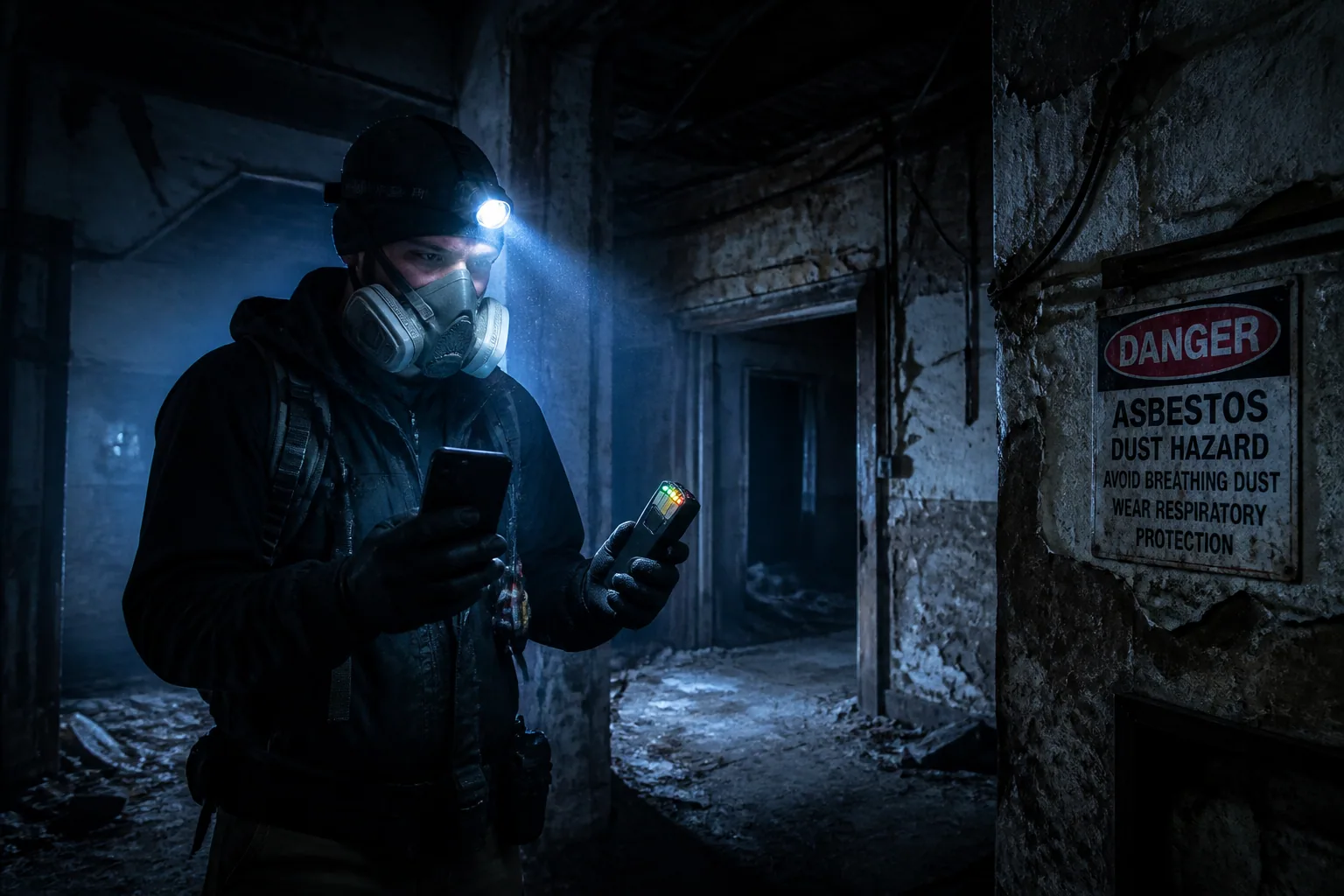
Abandoned and aging buildings are not just atmospheric. They are often structurally compromised and contaminated. The most common risks include mold, asbestos, lead dust, unstable floors, bad wiring, extreme temperatures, pests, and standing water. Each one can create immediate danger or long-term health issues.
The problem is that many of these hazards are hidden. A place may look photogenic and perfect for an overnight investigation, but the real damage could be inside the walls, above the ceiling tiles, or in the dust on the floor. That is why environmental awareness matters just as much as paranormal curiosity.
Mold, Asbestos, Lead, and Air Quality Risks During Long Investigations
Damp abandoned buildings are especially risky. The CDC and NIEHS both note that time spent in wet or moldy buildings is strongly associated with respiratory problems such as asthma attacks, chronic cough, allergic rhinitis, hypersensitivity pneumonitis, and skin issues, even in people without known allergies. Long-term mold exposure has also been linked to neurological symptoms like memory problems, dizziness, blurred vision, brain fog, increased stress, and even depression and anxiety. Sources: https://www.cdc.gov/niosh/mold/health-problems/index.html and https://www.niehs.nih.gov/health/topics/agents/mold
For ghost hunters, that means a haunted basement or flood-damaged hallway may be more than just unpleasant. If you start feeling congested, wheezy, itchy, foggy, or unusually tired during a session, the building itself may be affecting you.
Asbestos is another major concern in older structures. It can be found in insulation, siding, ceiling tiles, pipe lagging, and roofing materials. If it is disturbed, the fibers can become airborne, and inhalation significantly increases risks for lung cancer, asbestosis, and mesothelioma. The EPA and CDC both warn about these hazards in older or high-risk buildings. Sources: https://www.epa.gov/asbestos/what-are-health-risks-if-i-have-asbestos-my-home-building-apartment-or-school and https://www.cdc.gov/niosh/blogs/2024/high-risk-buildings.html
Lead is another hidden issue, especially in buildings built before 1978 in the United States. Peeling or disturbed lead-based paint can create dust and chips that are dangerous when inhaled or swallowed. Lead exposure can cause serious systemic harm, including kidney damage and neurodevelopmental effects. Even though adults are less vulnerable than children, no one should treat lead dust casually. Source: https://www.epa.gov/lead/protect-your-family-sources-lead
Old Wiring, Structural Collapse, and Temperature Extremes: The Most Immediate Dangers
Some risks are immediate and potentially life-threatening. Floors can give way, stairs can fail, ceilings can collapse, and loose debris can turn a simple walk into an injury. The CDC has documented structural collapse injuries in abandoned residential structures, including cases where responders were hurt after floors failed underneath them. Source: https://www.cdc.gov/niosh/firefighters/programs/pdfs/f202601.pdf
Faulty wiring is another major concern. People sometimes assume that abandoned buildings are dead buildings, but utility status can be misunderstood, and compromised wiring can still carry current or spark. Water intrusion, missing panels, and exposed conductors create electrocution and fire hazards. In ghost hunting, this risk becomes more serious because people often move in the dark and touch surfaces without full visibility.
Temperature is also part of the hazard picture. Old buildings often have little insulation, broken windows, damp floors, and major exposure to outside weather. Prolonged cold can cause cold stress, hypothermia, frostbite, and non-freezing cold injuries like trench foot or chilblains, especially when people are wet and tired. The CDC notes these risks clearly in cold-environment guidance. Source: https://www.cdc.gov/niosh/docs/2022-132/2022-132.pdf
If your shoes are soaked, your hands are numb, and your team is still trying to finish a midnight session, you are no longer just uncomfortable. You may be entering a genuine medical risk zone.
EMF Exposure and Ghost Hunting Gear: What Sensitive Investigators Should Know
Many ghost hunters use EMF meters, spirit boxes, and smartphone-based tools to detect environmental changes. Those tools can be fun and useful, but they can also become confusing if you do not understand what they are actually measuring. In haunted locations, electrical infrastructure, old wiring, radios, generators, and nearby equipment can all create fluctuations that look eerie but have ordinary explanations.
That is one reason it helps to document the environment carefully. If an EMF spike happens near a breaker box, a wall with live wiring, or a device that emits interference, the reading becomes much less mysterious. The more you log, the easier it is to separate environmental causes from unusual events.
For investigators who are sensitive to sensory input, the problem is not only whether EMF is present. It is also how the gear, lighting, and sounds shape your stress level. A session full of false alarms can increase anxiety and make you feel physically on edge, which then affects attention and judgment.
Sleep Loss, Anxiety, and Sensory Overload in Paranormal Investigations
Ghost hunting usually happens at night, and that alone can be a problem. Sleep deprivation significantly raises state anxiety, increases irritability, and impairs decision-making, critical thinking, and perception. After enough sleep loss, hallucinations and heightened suggestibility can occur. Source: https://pubmed.ncbi.nlm.nih.gov/27810176/
That means an exhausted investigator may hear more patterns than are really there, jump at harmless noises, or become more convinced that a vague sound was a voice. Sleep loss does not just make you tired. It changes how your brain processes evidence.
Sensory overload adds another layer. Darkness, cold, dampness, strange echoes, insects, and the general uncertainty of a haunted location can trigger strong stress responses. Over time, elevated cortisol and adrenaline may contribute to anxiety symptoms, panic-like reactions, or even PTSD-like responses in vulnerable people. Even a few hours of sleep loss can reduce positive emotion and increase emotional volatility, which makes late-night investigations harder to handle calmly.
In practice, this means an investigator should never assume that a bad feeling is proof of paranormal activity. Sometimes it is just a nervous system under pressure.
When Fear Becomes Harmful: Trauma, Suggestibility, and Mental Health Warning Signs
Fear is part of the experience for many people, but fear can cross a line when it stops being fun and starts affecting your wellbeing. Repeated exposure to intense fear in dark, isolating, or unpredictable settings can create lasting stress, especially if someone already has anxiety, trauma history, or sleep problems.
One issue ghost hunters should take seriously is suggestibility. When you expect to hear a voice or see a shape, your brain becomes better at finding one. That is not weakness. It is normal human perception under stress. But if combined with sleep deprivation, it can also increase misinterpretation and emotional distress.
Warning signs that the experience is becoming unhealthy include panic attacks, dissociation, persistent intrusive thoughts, insomnia after investigations, increasing fear before every session, or feeling unable to tell whether you are safe. If the activity begins to aggravate trauma symptoms or creates lingering anxiety, it is time to step back.
Environmental Threats Beyond the Paranormal: Radiation, Wildlife, Bacteria, Damp, and Cold Spots
Not every danger in a haunted place is visible. Some older buildings may contain unusual environmental sources, including legacy radiation hazards from old materials or equipment. While this is not the most common issue, it is one more reason not to assume that a derelict space is harmless just because it is empty.
Wildlife is a more frequent concern. Raccoons, bats, rats, insects, and stray animals can live in abandoned places and can bite, scratch, or contaminate surfaces. Rodent droppings and standing water can carry bacteria and other pathogens. Damp environments can also support bacteria and fungi that infect wounds or irritate skin, and people with immune suppression are especially vulnerable to invasive mold infections. Source: https://www.cdc.gov/fungal/about/about-invasive-mold-infections.html
Cold spots, while often discussed as paranormal clues, are usually simple indicators of drafts, broken windows, poor insulation, or water damage. They are still worth noting, but they should be treated as environmental data first. If a cold area is also wet, moldy, or exposed to outdoor air, it may be a health issue long before it is a mystery.
How Smartphone Tools Can Help You Document Hazards and Stay Safer
Smartphones are often dismissed as beginner tools, but they can be surprisingly helpful for safety. A phone can be used to photograph hazards, log room conditions, record temperatures, note timestamps, and track where strange readings occurred. That kind of documentation can protect you and improve the quality of your investigation notes.
This is where an app like Ghost Detector: Ectify can fit naturally into a smarter workflow. It is designed for ghost hunting sessions, with features for real-time EMF detection, session recording, and history tracking. You can learn more here: https://findthe.app/ectify-fc72z0. Used carefully, tools like this can help you record what happened, when it happened, and what else was present at the same time.
That matters because a good investigation is not just about catching an eerie moment. It is about context. If you capture an EMF spike, a sound, and a note that the room had exposed wiring, a draft, and wet flooring, your evidence becomes much more reliable and your risk assessment becomes much stronger.
Pre-Investigation Safety Checklists Every Ghost Hunter Should Use
Before entering any haunted or abandoned location, make safety part of the plan. A simple checklist can prevent a lot of problems. Start by checking whether the site is legally accessible, whether you have permission, and whether there are known hazards like mold, collapsed sections, or active utilities.
Next, inspect your gear. Bring charged lights, a fully charged phone, a first aid kit, gloves, sturdy shoes, a mask or respirator if dust and mold are likely, and clothing suited to the temperature. If the building is known for dampness, dust, or structural damage, protective equipment is not optional.
It is also wise to think about exit routes before you start. Know where you will leave if conditions worsen. If your group cannot explain how to get out quickly in the dark, you are not ready to investigate safely.
Protective Gear, Breaks, and Team Protocols That Reduce Risk
Good team habits reduce harm. Never explore alone if the location is unsafe or unfamiliar. Use buddy checks, establish a time limit, and agree on a signal for leaving immediately if someone feels unwell. One person should stay focused on safety and timestamps, not just on paranormal activity.
Breaks matter more than many teams realize. Step outside periodically, warm up, hydrate, and reassess how everyone is feeling. If someone is getting chilled, short of breath, panicked, dizzy, or mentally foggy, that is not the moment to push deeper into the building. It is the moment to pause.
Protective gear should match the hazard. Gloves help with debris and contaminated surfaces. Proper footwear helps with broken glass and unstable flooring. Masks can reduce inhalation of dust and mold in the right situations. Flashlights are better than relying on ambient light or a phone screen alone. The goal is to reduce exposure before it becomes a problem.
Turning Environmental Hazard Notes Into Better Evidence and Safer Investigations
One of the smartest habits a ghost hunter can build is environmental logging. Instead of only writing down paranormal claims, write down room conditions too. Note temperature, humidity, visible mold, odors, drafts, electrical equipment, broken windows, animal signs, water intrusion, and structural damage.
This approach does two things at once. First, it helps protect your health by reminding you of the risks present in the space. Second, it improves the quality of the evidence by giving every event context. If a voice appears in a room with a loose vent, a radio nearby, and rushing wind outside, you have a better chance of explaining or validating the result honestly.
In other words, careful logging does not ruin the mystery. It strengthens it by removing obvious false leads.
How to Know When to End an Investigation for Health Reasons
A good investigator knows when to stop. End the session if someone has trouble breathing, starts wheezing, feels faint, shows signs of hypothermia, gets injured, becomes disoriented, or feels panic becoming unmanageable. Also leave if conditions deteriorate, such as water entering the site, a floor becoming unstable, wiring appearing exposed, or wildlife becoming active.
You should also stop if the team is too sleep-deprived to think clearly. Once decision-making is compromised, the risk of injury and misinterpretation rises sharply. It is better to leave with incomplete evidence than to continue in a state where both safety and judgment are slipping.
If you notice that ghost hunting is leaving you emotionally shaken, unable to sleep, or increasingly fearful even after the session ends, take that seriously. The goal is exploration, not ongoing distress.
A Smarter, Safer Approach to Exploring Haunted Places
Ghost hunting can still be exciting, atmospheric, and meaningful. But the best investigators are not just curious. They are cautious. They understand that old buildings can contain mold, asbestos, lead dust, bad air, cold stress, unstable floors, wildlife, bacteria, and a lot of stress on the nervous system.
If you plan ahead, use protective gear, build in breaks, document environmental conditions, and stay honest about what your body and mind are telling you, you can lower the risk substantially. You will also end up with cleaner evidence, because you will know more about the environment in which that evidence appeared.
The hidden health risks of ghost hunting are real, but they are manageable when you treat safety as part of the investigation. In the end, a smarter approach does not make the experience less interesting. It makes it more responsible, more sustainable, and far more credible.
