
How Much Is Ghost Hunting Equipment? A Cost Breakdown
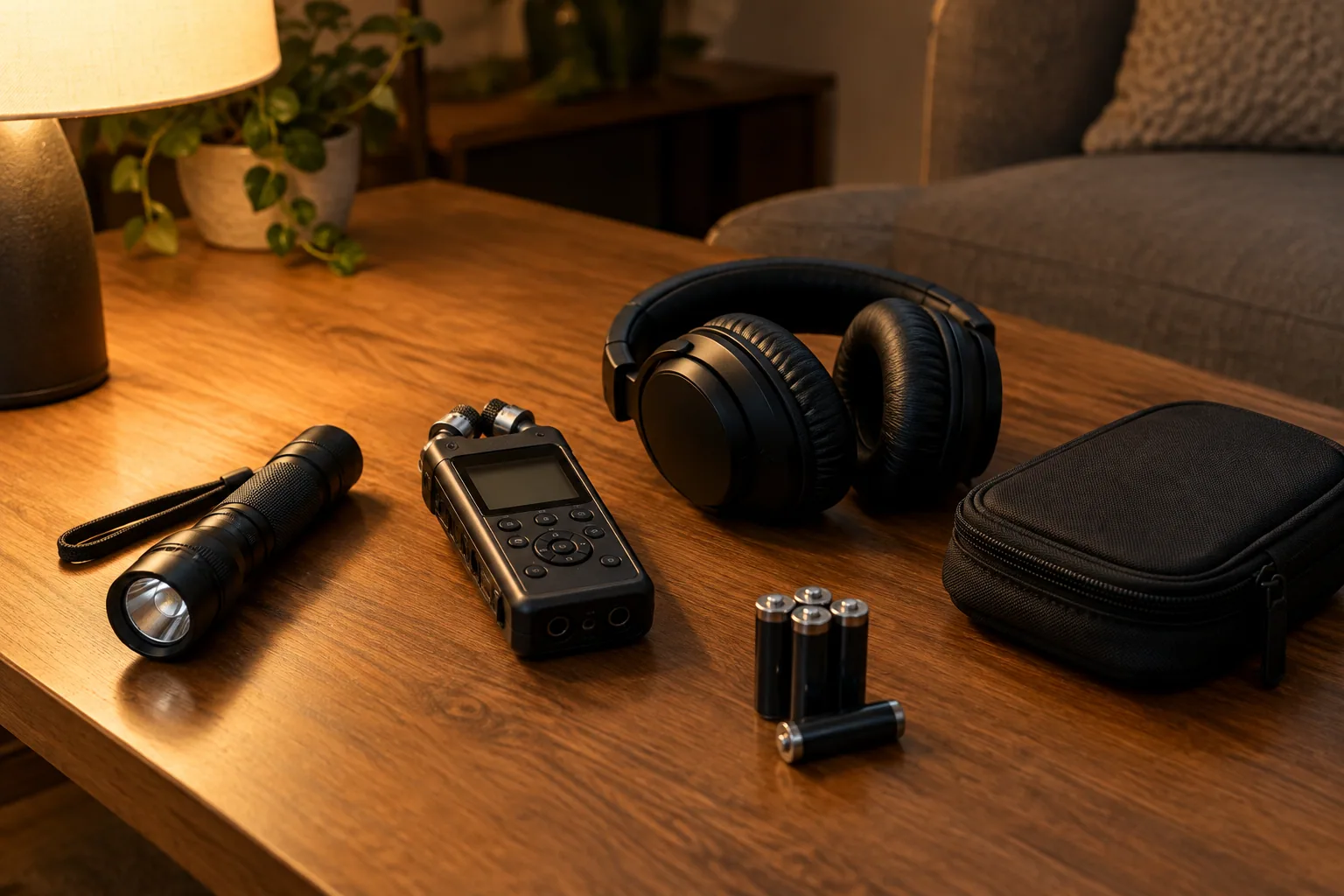
In this guide
You can start with $0 in new equipment if you already own a phone and flashlight. A basic setup with a light, notebook, entry-level EMF meter, and separate audio recorder has a planning range of $60–$360; adding an infrared-capable camera brings that to roughly $160–$1,160 or more, before tax, shipping, and any accessories you still need.
These are recreational investigation tools, not scientifically validated ghost detectors. Spending more can improve recording quality or measurement capabilities, but it does not make a device capable of proving ghosts are present.
How much does a ghost hunting setup cost?
All amounts below are in USD. These are planning ranges rather than live retail quotes: the dated retail examples are from October 2026 and have not been rechecked for November 19, 2026.
| Setup | Explicit equipment list | Equipment subtotal | Purchase type |
|---|---|---|---|
| Use what you own | Existing phone, flashlight, charging supplies, and notes app | $0 in new purchases | No subscription required |
| Basic dedicated setup | Light, notebook, and entry-level EMF meter: $30–$60 combined; audio recorder: $30–$300 | $60–$360 | One-time purchases, plus replacement batteries as needed |
| Add video equipment | Basic setup above, plus an infrared-capable camera: approximately $100–$800+ | $160–$1,160+ | One-time purchases, plus storage and power costs |
The wide ranges reflect different equipment choices, not a minimum amount you need to spend. The video tier assumes you already have compatible camera storage, power supplies, and any required infrared illumination. If you do not, add their actual checkout prices before treating the subtotal as your budget.
For comparison, an October 2026 listing put a GhostStop beginner bundle containing an EMF meter, wrist audio recorder, and flashlight at $139.95. That is a useful reference point, but check the current contents and price rather than assuming every beginner kit includes the same things.
What individual pieces of equipment cost
Buy by the device’s ordinary function, not the paranormal label on its packaging. A recorder captures sound; an EMF meter measures fields within its specified capabilities.
| Equipment | Representative planning price | What it physically does | Essential or optional? |
|---|---|---|---|
| Flashlight | No separately verified price here; a light is included in the $30–$60 minimal starter allowance | Illuminates your surroundings | Essential; use one you own first |
| Entry-level EMF meter | About $20–$200 across general EMF options | Measures specified electromagnetic fields | Optional |
| Digital audio recorder | About $30–$300 | Records sound for later playback | Audio recording is useful; a separate recorder is optional |
| Radio-sweep spirit box | About $30–$300, commonly around $100–$150 | Sweeps radio frequencies and produces changing audio | Optional |
| Infrared-capable or full-spectrum camera | Approximately $100–$800+ | Records light within the camera’s supported wavelength range | Optional, unless that recording capability is your goal |
| Thermal camera | Get a current model-specific quote; no verified range is provided here | Produces an image from infrared radiation associated with surface temperatures | Optional specialist equipment |
These ranges are broad budgeting references, not a current multi-retailer price comparison. Before ordering, compare the exact model at more than one retailer, including its accessories and delivered price.
Infrared night vision and thermal imaging are different purchases
An infrared night-vision camera records reflected infrared light, often with help from an infrared illuminator. A thermal camera instead shows temperature-related differences using emitted infrared radiation. A listing that says “IR” does not automatically mean thermal imaging.
For cameras, check the supported recording mode, storage requirements, power source, and whether an illuminator is included. For EMF meters, compare the measured field type, frequency range, measurement range, and axis configuration rather than relying on flashing lights or a “ghost detector” label.
A spirit box is also a separate buying decision. Use the dedicated spirit box cost guide if you want one, rather than adding it automatically to your first kit.
Three example budgets with itemized totals
These examples show equipment arithmetic, not guaranteed checkout totals. Accessories listed as already owned count as $0 in new spending, but only if you actually have compatible ones.
Phone-first setup: $0 in new equipment
Assumes you own: a smartphone with audio recording, a separate flashlight, charging supplies, and enough free phone storage.
- Existing phone for audio, video, and notes: $0 new spending.
- Existing flashlight: $0 new spending.
- Existing charging supplies: $0 new spending.
Total: $0 + $0 + $0 = $0.
Start here if your main goal is a spooky evening with friends or footage for social media. Use the phone’s normal recording tools first, and keep a separate light available instead of depending entirely on the phone flashlight.
Basic dedicated setup: $60–$360 before extras
Assumes you own: compatible headphones, the required batteries or charging supplies, and a way to transfer and play back recordings.
- Minimal starter group, consisting of a flashlight, notebook, and basic EMF meter: $30–$60 combined.
- Separate digital audio recorder: $30–$300.
Low end: $30 + $30 = $60.
High end: $60 + $300 = $360.
This is a broad shopping envelope, not a recommendation to buy a $300 recorder. If your phone already records usable audio, postpone the separate recorder and keep the initial equipment allowance at $30–$60.
Video-focused setup: $160–$1,160 or more before extras
Assumes you own: everything listed for the basic setup, plus compatible camera storage, camera power supplies, and any infrared illumination the chosen camera needs.
- Minimal starter group: $30–$60.
- Separate audio recorder: $30–$300.
- Infrared-capable camera: approximately $100–$800+.
Low end: $30 + $30 + $100 = $160.
Upper planning point: $60 + $300 + $800 = $1,160, with higher-priced cameras taking it beyond that.
For TikTok or YouTube, first decide what your existing phone cannot capture. Then use the ghost hunting video camera buying guide to choose for that specific limitation, rather than buying a camera simply because it is marketed for paranormal sessions.
Extra costs that advertised kits leave out
A kit price is only useful if it covers a working setup. Before checkout, separate durable purchases from costs you may pay again.
| Cost type | What to include | What to check |
|---|---|---|
| Durable accessories | Charger, rechargeable batteries, headphones, memory card, case, tripod, infrared illuminator | Compatibility and whether each item is included |
| Replacement supplies | Disposable batteries and worn accessories | Battery type and replacement availability |
| Software | Optional paid apps or subscriptions | One-time price versus recurring billing, renewal terms, and cancellation |
| Order costs | Shipping and sales tax | Final checkout total, not the product-page price |
| Session costs | Lawful venue admission and transportation | Organizer’s current price and what admission includes |
There is no single useful battery allowance for every setup. Check each device’s battery type and stated runtime, then plan power for your intended session length and bring compatible spares.
For lawful venue visits, follow the organizer’s access rules. If access or building safety is unclear, ask the venue operator or a qualified professional before making plans.
Compare bundles using a like-for-like shopping list
- Write down every exact model. “EMF meter” or “night-vision camera” is not enough to compare value.
- Price the same items individually. Do not compare a branded bundle with unrelated bargain substitutes.
- Add missing essentials. Include batteries, storage, chargers, and any required lighting.
- Remove duplicates from your needs list. A second flashlight or recorder may add little value if you already own a suitable one.
- Compare delivered totals and return terms. A lower headline price can lose its advantage after shipping or missing accessories.
Be cautious with vague camera specifications, unspecified sensor capabilities, or bundle photos showing accessories that are not listed as included. Save the contents list before ordering so you can check what arrives.
What beginners should buy first and postpone
Start with reliable lighting and a way to record audio. Run a short session somewhere you have permission to be, then review the recording before buying more equipment.
Use a simple recording routine:
- Say the date, location, and who is present at the start.
- Say “footsteps,” “door,” or “someone speaking” when you recognize an ordinary sound.
- Note device changes with a timestamp, such as “12:40, moved the meter beside the phone.”
- Play the recording back with headphones and list what made review difficult.
That list tells you what to buy next. Handling noise may call for a better recording position before a new recorder; poor visibility may call for better lighting before a specialist camera.
Postpone thermal cameras, multiple sensors, and radio-sweep equipment until you have a specific use for them. Borrowing can help you test a device before buying; renting may make sense for a one-off session if a suitable provider is available and the full rental terms work for you.
For an optional phone-based entertainment experience, Ectify uses your phone’s magnetometer for magnetic-field readings and a curated word bank for generated spirit-box responses. It can record and export session audio, but it is neither a radio-sweep spirit box nor a dedicated broadband EMF instrument; check its current pricing before adding any app cost to your budget.
Before paying for a meter, read the practical differences between smartphone sensors and dedicated EMF meters. Then make a shopping list containing only the equipment your first session showed you were missing.
FAQ
Why is ghost hunting equipment so expensive?
Some devices cost more because they contain specialized sensors, imaging hardware, or additional recording capabilities. A paranormal label alone does not establish better performance or justify a higher price. Compare measurable specifications, included accessories, warranty coverage, and ordinary audio or camera alternatives before paying extra.
Does expensive ghost hunting equipment prove ghosts are present?
No. An expensive device may measure fields, record sound, or capture temperature differences more capably, but those observations do not establish a paranormal cause. Before your next session, learn what each device measures and record possible ordinary explanations alongside anything unusual.
