
Is Ghost Hunting a Real Job? Paid Roles and Reality
In this guide
Yes, you can earn money from ghost hunting and paranormal-themed work, but a paid tour, freelance video project, or event business is different from a salaried investigator position. Hobby-group membership may be unpaid, and earning money from spooky entertainment does not mean you’re being paid to scientifically detect ghosts. No app or device scientifically proves spirits exist.
If you want to turn your interest into work, start by identifying what someone would actually pay you to deliver: a well-run tour, an entertaining event, an edited video, or production support.
Which paranormal-related roles can actually pay?
Tours, writing, teaching, and other related services are established ways to monetize a paranormal interest, as this overview of ghost-hunting work explains. That is different from finding an employer who pays you simply to investigate reported hauntings.
Use these roles as search targets, not as a list of employers currently hiring:
| Role | Who pays and for what | Arrangement to verify | Skills you can demonstrate |
|---|---|---|---|
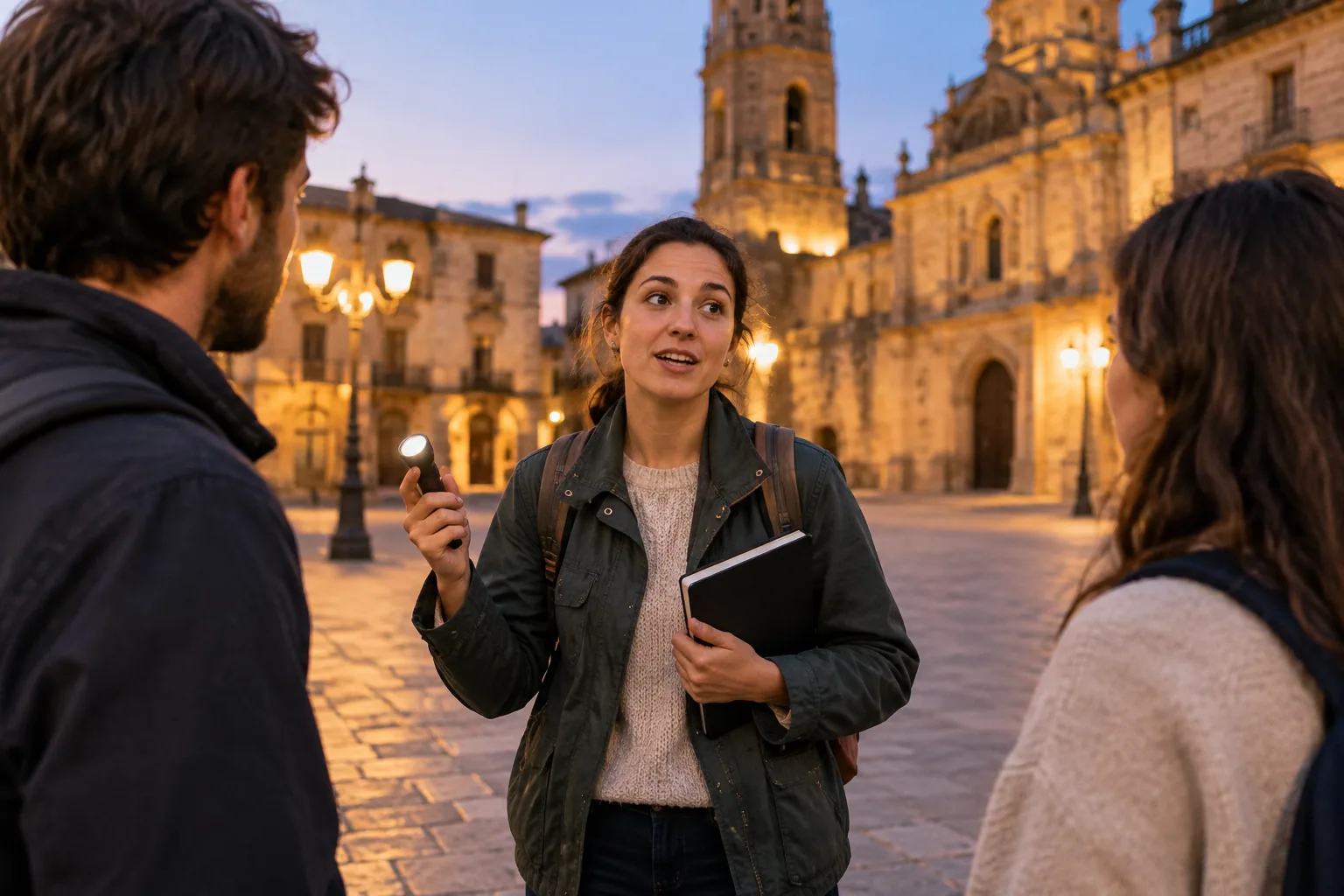
| Ghost-tour guide | A tour operator pays you to lead guests through a planned route and tell researched stories | Employee, seasonal worker, or contractor | Public speaking, local-history research, timekeeping, guest care |
| Authorized event host | An organizer pays a hosting fee, or guests buy tickets from your business | Freelance contract or self-employment | Scheduling, venue coordination, clear instructions, customer service |
| Paranormal content creator | Audiences, platforms, advertisers, or sponsors support published entertainment | Usually self-employment; payment is not assured | Audio recording, editing, storytelling, audience development |
| Entertainment production or research worker | A production company or client pays for research, recording, editing, or logistical work | Employment or a project contract | Fact-checking, production planning, sound, editing, documentation |
The deliverable matters more than the paranormal label. A guide owes guests the advertised tour. An editor owes the agreed video. An event host should promise an organized experience, not a ghost encounter.
For openings, search terms such as “ghost tour guide,” “walking tour guide,” “event host,” “production researcher,” and “video editor” alongside your city. Check the operator’s official recruitment page and the original job listing. A team’s “join us” form is not evidence of paid employment unless it states compensation.
How much could you earn after expenses?
There is no dependable universal “ghost-hunter salary” to use for career planning. A wage, an event’s ticket sales, a creator’s platform revenue, and a business owner’s profit measure different things.
One reported paranormal side-business example described a three-person operation bringing in $10,000 to $20,000 annually. Dividing that equally gives roughly $3,333 to $6,667 per person before considering expenses or taxes. That is one business example, not a salary benchmark or a forecast for your area.
For an advertised job, save the listing and record its date, location, guaranteed rate, expected hours, and employment status. Check whether tips are extra, whether preparation is paid, and whether the quoted figure assumes a full schedule.
A hypothetical event budget: $240 in sales is not $240 in pay
The following numbers are made-up planning assumptions, not actual venue prices, insurance quotes, or recommended ticket rates. Replace every line with written quotes before selling tickets.
| Budget item | Hypothetical amount |
|---|---|
| Ticket revenue: 12 guests × $20 | $240 |
| Authorized venue booking | −$60 |
| Insurance allocation, if required | −$25 |
| Ticketing and payment fees | −$15 |
| Travel | −$20 |
| Equipment rental or wear allowance | −$20 |
| Remainder before tax | $100 |
Suppose you spend two hours hosting and six hours researching, coordinating, promoting, traveling, setting up, and editing. That $100 works out to $12.50 per hour before tax, assuming one person does all the work and no other costs arise.
If only six guests attend, revenue falls to $120. Keeping the same costs as a stress test produces a $20 loss. Also budget for refunds, cancellations, and any payment owed to a co-host.
For creator work, record actual money received rather than treating views or followers as earnings. Track editing time, subscriptions, travel, and equipment costs against each project.
Which skills and qualifications should you build?
Choose training that improves the work someone is buying:
- For tours: Practice a short historical story, distinguish documented history from local legend, and rehearse keeping a group on schedule.
- For content: Record understandable audio, edit a clear sequence, and label staged moments or entertainment effects honestly.
- For events: Build a schedule, write guest instructions, handle questions, and prepare cancellation and refund wording.
- For production work: Compile accurate background information, organize files, meet deadlines, and follow the client’s brief.
A privately sold paranormal certificate is not automatically an accredited qualification or an employer requirement. Before paying, ask who recognizes it and which actual job requires it. The ethical concerns around purchased ghost-hunting credentials are a reason to examine the issuer’s claims rather than trusting the title alone.
Requirements depend on your location and activity. Check business registration, guiding rules, venue conditions, recording consent, and insurance with the relevant authority, venue, or insurer. For legal or safety questions, ask a qualified local professional.
Use only locations where you have permission to run the activity, and obtain consent before recording participants. Review this permission and conduct guidance for ghost-hunting sessions before inviting guests.
Your equipment explanation should be equally clear. A magnetic reading is a measurement of the magnetic environment, not identification of a spirit; an unexplained sound should remain unexplained unless you can establish its cause.
How to check a ghost-hunting job offer
Before accepting work or spending money, get these points in writing:
- Employer identity: Legal business name, contact details, and the person responsible for paying you. Confirm the vacancy through the organization’s own contact channel.
- Duties: What you deliver, where you work, your schedule, and whether promotion, setup, travel, or editing is included.
- Pay terms: Guaranteed rate, payment date, treatment of tips, and whether training and preparation are paid.
- Employment status: Employee, contractor, volunteer, or business partner. Do not assume these offer the same protections or responsibilities.
- Venue authorization: Who has permission to hold the event, and whether that permission covers recording and paying guests.
- Cancellations: What happens to your pay if attendance is low, the venue cancels, or customers request refunds.
- Required expenses: Who pays for transport, insurance, equipment, uniforms, and background checks, if applicable.
Guaranteed ghost encounters, guaranteed income, recruitment fees, or costly mandatory equipment purchases are reasons to investigate further before committing. Ask why each expense is necessary and whether you can use equipment you already own.
Buying an investigation ticket makes you a customer, not an employee. Volunteering may help you practice, but a promise of “exposure” is not a pay agreement.
Test one low-cost side project before changing careers
You do not need to launch a paranormal business to find out whether you enjoy the actual work. Try this sequence:
- Choose one role. Pick guiding, hosting, creating, or production support. Give yourself one deliverable, such as a five-minute hosting sample or a two-minute edited video.
- Study legitimate opportunities. Read local operators’ recruitment pages and original listings. Note the requested skills, written pay terms, and whether the opportunity is paid or voluntary.
- Practice at home with consenting friends. Explain the entertainment format, agree on recording, and run a short session. Ask for feedback on clarity, pacing, and comfort rather than whether you “found a ghost.”
- Make an honest work sample. Demonstrate your introduction, instructions, storytelling, or editing. Label entertainment effects and do not present generated responses as evidence.
- Log every hour and expense. Include preparation, messages, recording, editing, and revisions. Set a spending limit before buying anything.
- Test demand. Apply for a suitable paid opening or pitch a clearly defined service. Look for repeatable net earnings before depending on it for living expenses.
For an optional entertainment tool, Ectify can record and export session audio and let you review timestamped session history. Its spirit-box responses come from a curated word bank, and its magnetic readings come from your phone’s magnetometer, not verified spirit detection. Check the session feature overview before deciding whether it fits your sample.
An audio sample can show that you speak clearly, manage pauses, and build an engaging story without claiming supernatural evidence. If video is your preferred route, use this guide to making paranormal content that holds attention to plan your sample.
Start by finding one legitimate opportunity and writing down its deliverable, required skills, and pay terms. Then make a small work sample for that specific role before spending money on gear or credentials.
